

A sore, scratchy throat can be frustrating, especially when it occurs with sneezing, a runny or stuffy nose, or itchy eyes. If these symptoms keep appearing around certain triggers, you may wonder, can allergies cause sore throat? Yes, allergies can cause throat irritation, often because mucus drains down the back of the throat and causes inflammation. The discomfort may continue while you are exposed to the allergen, but it often improves when the trigger is removed or allergy symptoms are controlled.
However, an allergy-related sore throat can feel similar to a cold or other respiratory infection, so other symptoms matter. Allergies typically do not cause a high fever, severe throat pain, or pus-like white patches on the tonsils. If you develop trouble breathing, difficulty swallowing, or swelling of the throat, tongue, or lips, seek emergency medical care immediately, as these symptoms can indicate a potentially life-threatening allergic reaction.
How Do Allergies Cause A Sore Throat?
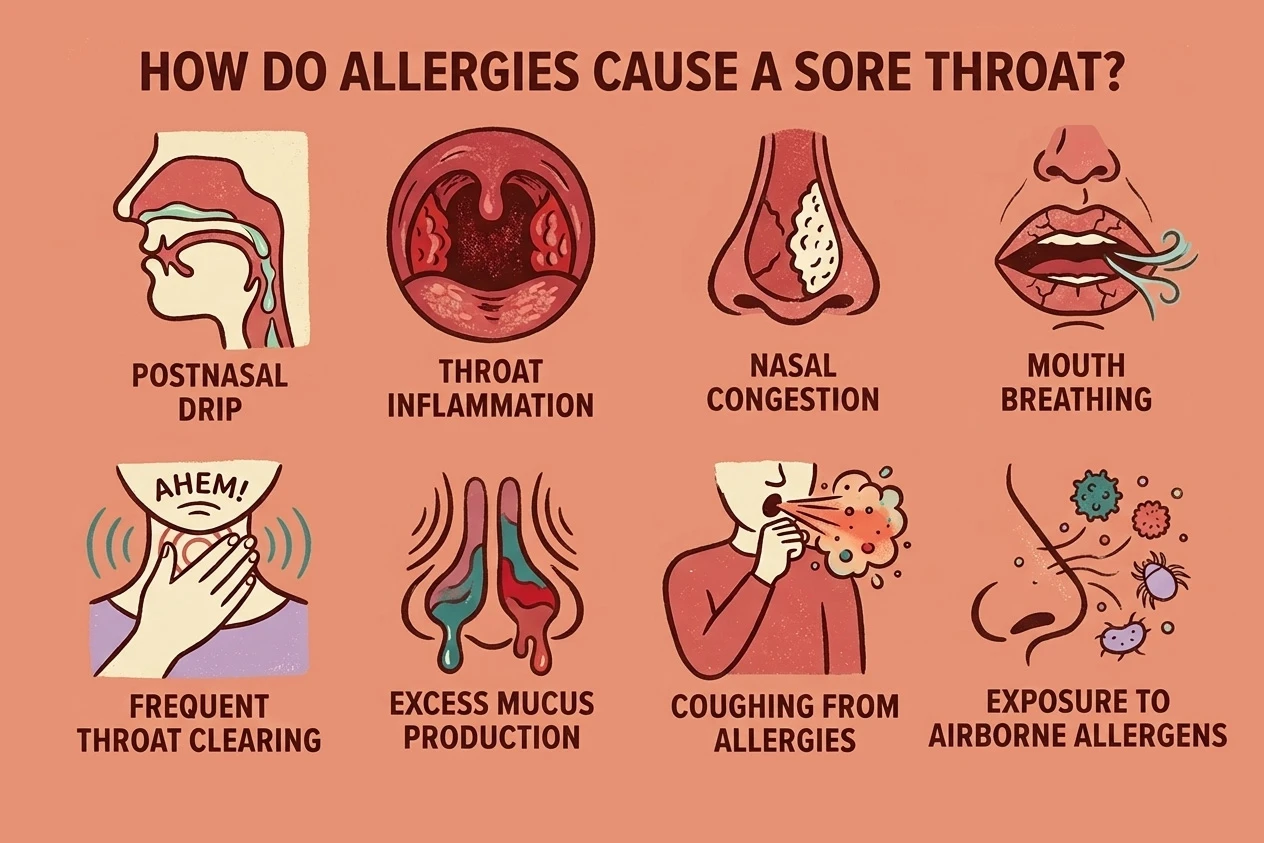
If your throat feels scratchy, irritated, or painful during an allergy flare-up, the discomfort can be difficult to ignore, especially when it affects swallowing, talking, or sleeping. Allergies can affect the nose, sinuses, and throat at the same time, creating several sources of irritation. The most common triggers involve excess mucus, inflammation, nasal congestion, and repeated irritation of sensitive throat tissues.
Postnasal Drip
Allergies can increase mucus production in the nose, and some of this mucus may drain down the back of the throat. This is called postnasal drip and is one of the most common reasons allergies can cause a sore throat. Constant drainage can irritate throat tissues and create a scratchy, raw, or burning sensation.
Throat Inflammation
When your immune system reacts to an allergen, it releases chemicals such as histamine that promote inflammation in affected tissues. This inflammatory response can involve the lining of the nose and throat, making the throat feel irritated or uncomfortable. You may notice soreness, itching, or a sensation that your throat feels swollen.
Nasal Congestion
Allergic reactions can cause swelling and congestion inside the nose, making it harder to breathe normally through your nasal passages. When the nose remains blocked, mucus can build up and drain toward the throat instead. Persistent congestion can therefore contribute to throat irritation through both drainage and reduced nasal airflow.
Mouth Breathing
A congested nose may force you to breathe through your mouth, particularly while sleeping. Breathing through the mouth allows more air to pass directly over the throat and can reduce moisture on its surface. This dryness may leave your throat feeling sore, scratchy, or irritated, especially when congestion lasts for several days.
Frequent Throat Clearing
Postnasal drip can create a persistent sensation of mucus or something stuck in the back of your throat. This may cause you to repeatedly clear your throat in an attempt to remove the mucus. Unfortunately, frequent throat clearing can further irritate already inflamed tissues and make the soreness more noticeable.
Excess Mucus Production
During an allergic reaction, the body may produce more mucus as part of its response to inhaled allergens. When this mucus becomes excessive, it can collect in the nose and throat and contribute to coughing, throat clearing, and irritation. The resulting discomfort may continue as long as the allergic reaction remains active.
Coughing From Allergies
Allergies can trigger coughing through nasal drainage and irritation of the upper airways. Repeated coughing places mechanical stress on the throat, which can make an already irritated throat feel increasingly sore. A persistent allergy-related cough may therefore contribute to throat pain even when there is no throat infection.
Exposure To Airborne Allergens
Breathing in allergens such as pollen, mold spores, dust mites, or pet dander can trigger inflammation in the respiratory tract in sensitive people. This reaction may cause irritation involving the nose, mouth, and throat along with sneezing, congestion, and increased mucus. Continued exposure can keep the allergic response active and prolong throat discomfort.
What Does An Allergy-Related Sore Throat Feel Like?
An allergy-related sore throat often feels dry, scratchy, itchy, irritated, or mildly painful rather than intensely painful. You may also notice frequent throat clearing, a sensation of mucus dripping down the throat, coughing, or discomfort when swallowing. Unlike many throat infections, allergy symptoms commonly occur alongside sneezing, nasal congestion, a runny nose, or itchy eyes without a fever.
In one study of 260 people with allergic rhinitis, 49.1% reported moderate or greater postnasal drip, while 46.3% reported dry mouth, both of which can contribute to throat discomfort.
How Long Does A Sore Throat From Allergies Last?
A sore throat caused by allergies can last as long as you remain exposed to the allergen, so there is no single number of days that applies to everyone. Mild irritation may improve within a few days after exposure decreases, while seasonal or ongoing allergies can cause throat discomfort for several weeks or even months. The symptoms may also return whenever you encounter the trigger again.
When Should You Go To The ER
Most allergy-related sore throats are not emergencies, but a sudden change in your throat or breathing can signal a severe allergic reaction or anaphylaxis. Go to the ER or call emergency services immediately if symptoms develop rapidly after exposure to a suspected allergen, particularly when breathing, swallowing, circulation, or multiple body systems are affected.
- Difficulty breathing or shortness of breath.
- Tightness or closing sensation in the throat.
- Swelling of the tongue, lips, face, or throat.
- Trouble swallowing or sudden choking.
- Wheezing or persistent coughing after allergen exposure.
- Dizziness, fainting, confusion, or unusual weakness.
- A weak pulse or signs of very low blood pressure.
- Widespread hives or sudden skin swelling accompanied by breathing or swallowing problems.
- Rapidly worsening symptoms involving more than one body system, such as skin changes combined with vomiting or breathing problems.
How Can You Relieve A Sore Throat From Allergies?
An allergy-related sore throat often improves when the underlying allergic reaction and nasal symptoms are controlled. Keeping the throat moist and reducing exposure to triggers can also ease irritation and postnasal drip. Try these measures to make your throat more comfortable:
- Drink Fluids: Water and warm, non-caffeinated drinks help keep the throat moist and soothe irritation.
- Use Saline Rinse: A saline nasal rinse can clear allergens and excess mucus, reducing postnasal drip.
- Take Antihistamines: Antihistamines can reduce allergy symptoms such as sneezing, runny nose, and itching.
- Use Nasal Steroids: These can reduce nasal inflammation and congestion when allergic rhinitis is persistent.
- Avoid Allergy Triggers: Limit exposure to pollen, dust, mold, pet dander, and other known triggers.
- Avoid Smoke: Cigarette smoke and strong irritants can worsen throat inflammation and discomfort.
Get Evaluated For Severe Allergy Symptoms
Most allergy-related sore throats can be managed with routine care, but severe or rapidly worsening symptoms may require immediate medical attention. If throat irritation occurs with significant swelling, breathing problems, or difficulty swallowing, prompt evaluation is important because these symptoms can indicate a serious allergic reaction.
For non-life-threatening symptoms, visit East Houston Medical Center if your sore throat persists, worsens, or does not improve after controlling your allergy symptoms. If you develop difficulty breathing, throat or tongue swelling, fainting, severe trouble swallowing, or rapidly worsening symptoms, seek emergency medical care immediately and call 911.
Key Takeaways
- Yes, allergies can cause a sore throat, commonly due to postnasal drip and throat irritation.
- Postnasal drip, congestion, mouth breathing, and coughing can make throat discomfort worse.
- An allergy-related sore throat may last as long as allergen exposure continues.
- Sneezing, itchy eyes, runny nose, and nasal congestion are more suggestive of allergies than an infection.
- Fever, severe throat pain, or white patches may indicate an infection rather than allergies.
- Staying hydrated, avoiding triggers, using saline rinses, and controlling allergy symptoms may help reduce throat irritation.
- Difficulty breathing, throat swelling, trouble swallowing, or fainting requires immediate emergency care.
Frequently Asked Questions
Can Allergies Cause A Sore Throat Without A Cold?
Yes. Allergies can cause a sore throat without a cold, often because postnasal drip, nasal congestion, mouth breathing, and throat irritation dry or inflame the throat. Allergy symptoms usually occur without fever.
Can Seasonal Allergies Cause A Sore Throat?
Yes. Seasonal allergies can cause a sore throat when pollen triggers nasal inflammation and increased mucus production. Postnasal drip can irritate the throat, especially during periods of high pollen exposure.
Can Allergies Cause A Sore Throat And Cough?
Yes. Allergies can cause both a sore throat and cough, particularly when mucus drains into the throat or allergens irritate the airways. Frequent coughing and throat clearing can further worsen throat irritation.
How Do I Know If My Sore Throat Is From Allergies?
An allergy-related sore throat is more likely when it occurs with sneezing, runny or stuffy nose, itchy eyes, postnasal drip, or an itchy throat. Fever, severe throat pain, swollen glands, or white patches may point to an infection instead.