

Yes, a cold is contagious and can spread from one person to another through respiratory droplets, close contact, and contaminated surfaces. You can spread a cold before you notice symptoms, and the risk of transmission is generally higher during the early days of illness.
The common cold is a viral infection of the upper respiratory tract that usually affects the nose and throat. More than 200 respiratory viruses can cause cold symptoms, with rhinoviruses being the most frequent cause in the United States. Most colds improve on their own, but knowing the common cold causes, symptoms, stages, and contagious period can help you manage the illness and reduce the risk of spreading it to others.
What Causes the Common Cold?
The common cold is caused by different respiratory viruses that infect the upper airways. Rhinoviruses are the most frequent cause of colds in the United States, but other viruses, including common human coronaviruses, parainfluenza viruses, adenoviruses, enteroviruses, and human metapneumovirus, can also cause cold symptoms.
Common cold-causing viruses can spread when respiratory droplets reach another person’s nose, mouth, or eyes. Transmission can also occur when someone touches a contaminated surface and then touches their face, making hand hygiene and avoiding close contact with sick people important ways to reduce exposure.
Rhinoviruses
Rhinoviruses are the most frequent cause of the common cold in the United States and can circulate throughout the year. They commonly produce symptoms such as a runny or stuffy nose, sneezing, cough, sore throat, headache, and mild body aches.
Read More: Rhinovirus: Symptoms, Causes & Treatment
How Cold Viruses Spread
Cold viruses can spread through respiratory droplets released when an infected person coughs or sneezes. They may also spread through close personal contact or contaminated surfaces when virus particles reach the eyes, nose, or mouth.
What Are the Common Cold Symptoms?
The common cold symptoms usually develop gradually and mainly affect the nose and throat. Symptoms commonly peak within about 2 to 3 days and can vary in severity from one person to another.
Common symptoms include:
- Runny nose
- Nasal congestion
- Sneezing
- Sore throat
- Cough
- Headache
- Mild body aches
- Fatigue
- Low-grade fever, which is more common in children
A cold does not always cause every symptom on this list. Adults often have little or no fever, while children may be more likely to develop a low-grade fever. Cold symptoms can also overlap with flu, COVID-19, and other respiratory infections, so symptoms alone may not always identify the exact illness.
What Are the Common Cold Stages?
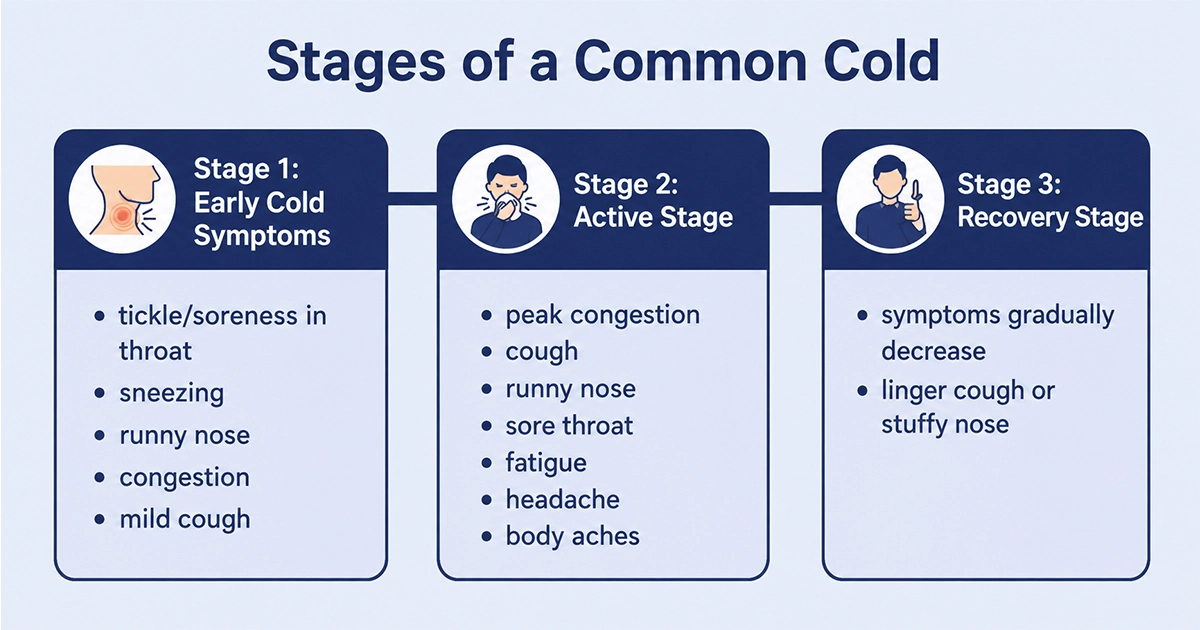
The common cold stages can generally be understood as early, active, and late stages. The timing is not identical for everyone, but symptoms often become more noticeable over the first few days before gradually improving.
Stage 1: Early Cold Symptoms
The early stage often begins with a tickle or soreness in the throat, followed by sneezing, a runny nose, congestion, or a mild cough. This stage can begin within a few days after exposure, and a person may already be contagious even before recognizing that they are getting sick.
Stage 2: Active or Peak Stage
During the active stage, symptoms usually become more noticeable and may reach their peak. Congestion, coughing, runny nose, sore throat, fatigue, headache, and mild body aches can occur together, while fever is more common in children than adults.
Stage 3: Recovery Stage
During the recovery stage, the main cold symptoms gradually become less intense as the body clears the infection. A stuffy nose or cough may continue after other symptoms improve, so feeling better does not necessarily mean every symptom will disappear immediately.
Sore Throat and Body Aches With a Cold
A sore throat and body aches can both occur with a common cold, although they do not affect everyone. A sore or scratchy throat is often an early symptom, while mild body aches may become more noticeable as other symptoms reach their peak.
If body aches are severe, symptoms begin suddenly, or fever and chills are prominent, another respiratory illness such as influenza may be more likely. Because cold, flu, and COVID-19 symptoms can overlap, testing may be appropriate for people at higher risk of complications.
How Long Is a Cold Contagious?
A person can spread a cold before symptoms appear and may remain contagious while symptoms continue. The risk is generally highest during the first few days of illness, when symptoms are often at their worst, although the exact contagious period can vary depending on the virus and the individual.
Some sources describe contagiousness as lasting for up to two weeks, particularly when symptoms persist. Current respiratory-virus guidance also emphasizes staying home while symptoms are not improving and returning to normal activities once symptoms are improving overall and you have been fever-free for at least 24 hours without fever-reducing medication.
When Is a Cold Most Contagious?
A cold is generally most contagious during the first few days after symptoms begin. This is when coughing, sneezing, runny nose, and other respiratory symptoms may be strongest, increasing the opportunities for the virus to spread to people nearby.
1. Before Symptoms Appear
You may be able to spread a cold before you realize that you are sick. The incubation period can be as short as about 12 hours to several days, depending on the virus, so someone who feels healthy may still be approaching the start of symptoms.
2. During Peak Symptoms
The first few days of noticeable illness are typically the period when transmission risk is highest. Staying home when you feel sick, avoiding close contact, covering coughs and sneezes, and practicing good hand hygiene can help reduce the chance of passing the virus to others.
3. During Recovery
As symptoms improve, the risk of spreading a respiratory virus generally decreases, but it may not disappear immediately. Continuing good hygiene and taking reasonable precautions while you still have symptoms can help protect family members, coworkers, and other people around you.
How Does a Cold Spread?
Cold viruses can spread when an infected person coughs, sneezes, or releases respiratory droplets near another person. Transmission can also happen when virus particles are left on hands or surfaces and then transferred to the eyes, nose, or mouth.
The most common ways a cold can spread include:
- Coughing or sneezing near another person
- Close personal contact
- Touching contaminated surfaces
- Touching the eyes, nose, or mouth with unwashed hands
- Sharing close spaces with someone who is sick
Because respiratory viruses can spread through more than one route, reducing exposure works best when several prevention habits are used together.
How Long Does a Cold Last?
Most common colds improve on their own and usually last less than a week, although some symptoms can continue for 7 to 10 days or longer. A runny nose and cough can sometimes linger after the main illness has started to improve.
If symptoms are gradually improving, lingering congestion or cough does not necessarily mean the infection is becoming more serious. However, symptoms that persist without improvement, improve and then become worse, or are accompanied by concerning signs should be evaluated by a healthcare professional.
How Is a Cold Treated?
There is no cure that eliminates the common cold, so treatment focuses on managing symptoms while the body recovers. Rest, fluids, saline nasal spray, a clean humidifier, throat lozenges, and appropriate over-the-counter medicines can help relieve symptoms for many people.
Do Antibiotics Treat a Cold?
No. Antibiotics do not treat the viruses responsible for common colds and will not make a viral cold resolve faster. Unnecessary antibiotic use can cause side effects and contribute to antimicrobial resistance, so antibiotics should only be used when a healthcare professional determines they are appropriate for a bacterial infection.
When to Consider Testing
Cold symptoms can resemble flu and COVID-19, which can matter because antiviral treatments are available for those illnesses and work best when started early. If you are at higher risk for severe flu or COVID-19 and develop cold-like symptoms, contact a healthcare professional promptly about whether testing or treatment is appropriate.
How Can You Prevent Spreading a Cold?
Good hygiene and respiratory-virus precautions can lower the chance of spreading a cold. Washing your hands, covering coughs and sneezes, improving indoor air, cleaning frequently touched surfaces, and limiting close contact while sick are practical steps that can protect people around you.
1. Wash Your Hands
Wash your hands regularly with soap and water, particularly after coughing, sneezing, blowing your nose, or touching potentially contaminated surfaces. Avoid touching your eyes, nose, and mouth with unwashed hands because these areas can provide a route for viruses to enter the body.
2. Cover Coughs and Sneezes
Cover your mouth and nose with a tissue when coughing or sneezing, then dispose of the tissue properly. If a tissue is not available, coughing or sneezing into your elbow rather than your hands can help reduce contamination of your hands and nearby surfaces.
3. Avoid Close Contact While Sick
When you have a respiratory illness, staying away from others while symptoms are worsening can reduce transmission. CDC guidance recommends returning to normal activities when symptoms are improving overall, and you have been fever-free for at least 24 hours without using fever-reducing medication.
When to See a Doctor for a Cold?
Most colds are mild and improve with time, but certain symptoms may indicate that you need medical evaluation. Consider seeking medical care if you have any of the following:
- Trouble breathing or shortness of breath
- Signs of dehydration
- A fever lasting longer than four days
- Symptoms lasting more than 10 days without improvement
- Symptoms that improve but then return or become worse
- Severe or unusual symptoms that concern you
People with chronic medical conditions, weakened immune systems, or other risk factors for severe respiratory illness may need to contact a healthcare professional sooner.
For non-life-threatening symptoms that need evaluation, East Houston Medical Center’s Urgent Care Services can provide appropriate medical assessment. For scheduled or follow-up care, you can also explore East Houston Medical Center’s Outpatient Services.
If you have severe difficulty breathing, chest pain, severe bleeding, or another life-threatening emergency, seek emergency medical care immediately through East Houston Medical Center’s Emergency Care.
Need Care for Cold Symptoms? East Houston Medical Center
Most colds improve with rest, fluids, and symptom-focused care, but persistent or worsening symptoms may require professional evaluation. If you need help with a non-life-threatening illness, visit East Houston Medical Center to explore available urgent care services and other patient-care options. For severe or potentially life-threatening symptoms, seek emergency medical attention immediately.
Frequently Asked Questions
Is a Cold Contagious Before Symptoms Start?
Yes. A person can spread a cold before noticing symptoms, and contagiousness is generally highest during the early days of illness when symptoms are strongest.
How Long Is a Cold Contagious?
A cold can remain contagious while symptoms continue, although the risk usually decreases as you recover. The exact contagious period varies by virus and person, with the highest risk generally occurring during the first few days.
Can You Have a Cold Without a Fever?
Yes. Fever is usually low-grade and is less common in adults with a common cold. You can still have typical cold symptoms such as congestion, sneezing, runny nose, sore throat, and cough without developing a fever.
How Can You Tell a Cold From the Flu?
A cold usually develops more gradually and mainly causes nasal and throat symptoms, while flu often begins suddenly and causes more pronounced fever, chills, body aches, and fatigue. Because symptoms overlap, testing may sometimes be needed to tell them apart.
Is a Cold Contagious After 7 Days?
Yes, you can still be contagious after 7 days, although the risk is usually lower as your symptoms improve. Some people may remain contagious for up to two weeks, especially if they still have symptoms.