
If you are dealing with concerns about acid reflux, it can be helpful to know that it refers to a digestive condition involving the movement of stomach contents back into the esophagus. The condition is common and may occur occasionally, while repeated episodes can be associated with gastroesophageal reflux disease (GERD). Although acid reflux is often manageable, frequent episodes can affect daily comfort and quality of life.
But acid reflux should not always be treated as a minor digestive issue. Ongoing or worsening reflux may require medical evaluation, particularly when it begins interfering with eating, sleeping, or everyday activities. Severe or unexplained chest discomfort should receive urgent medical attention because symptoms associated with reflux can sometimes resemble those of a serious heart condition.
What Causes Acid Reflux?
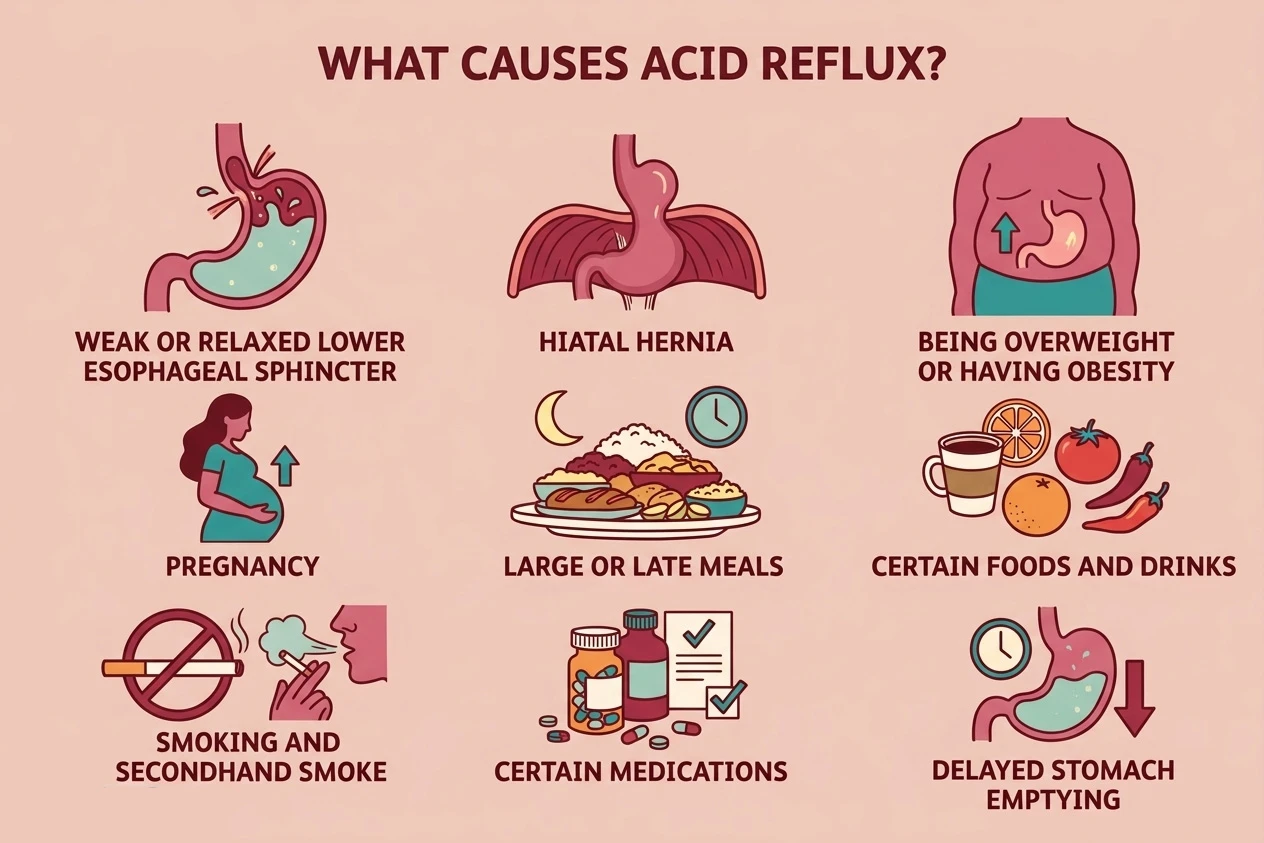
Acid reflux can happen occasionally, but repeated reflux may develop when the lower esophageal sphincter does not close properly or when pressure inside the abdomen increases. Several factors can contribute to this process, and identifying them can help explain why reflux keeps returning.
Weak Or Relaxed Lower Esophageal Sphincter
The lower esophageal sphincter is a ring of muscle between the esophagus and stomach that normally prevents stomach contents from flowing backward. When this muscle becomes weak or relaxes at inappropriate times, stomach acid can move into the esophagus. This is one of the main mechanisms behind recurring acid reflux and GERD.
Hiatal Hernia
A hiatal hernia occurs when part of the upper stomach pushes through the diaphragm and moves into the chest. This can interfere with the normal barrier between the stomach and esophagus, making reflux more likely or worsening existing GERD. Many people with a hiatal hernia have no noticeable symptoms, but larger hernias can contribute to persistent reflux.
Being Overweight Or Having Obesity
Excess weight can increase pressure within the abdomen, which may encourage stomach contents to move upward into the esophagus. Obesity is also associated with changes that can affect the lower esophageal sphincter and increase the likelihood of GERD. For people who are overweight, medically appropriate weight loss may help reduce reflux symptoms.
Pregnancy
Pregnancy can make acid reflux more likely because the growing uterus increases pressure within the abdomen. Hormonal changes may also relax the lower esophageal sphincter, allowing stomach contents to move upward more easily. Reflux during pregnancy is common, although persistent or severe symptoms should still be discussed with a healthcare professional.
Large Or Late Meals
Eating a large meal can increase the amount of stomach contents and pressure within the stomach, making reflux more likely in some people. Eating shortly before lying down can also make it easier for stomach contents to move backward. NIDDK notes that leaving at least three hours between a meal and lying down may improve nighttime GERD symptoms.
Certain Foods And Drinks
Some foods and beverages can trigger or worsen reflux in susceptible people, although individual triggers vary. Commonly reported triggers include high-fat foods, spicy foods, chocolate, mint, citrus, tomatoes, coffee, caffeine, and alcohol. Rather than avoiding every possible trigger, it can be more useful to identify which foods consistently worsen your own symptoms.
Smoking And Secondhand Smoke
Smoking can contribute to acid reflux by affecting the lower esophageal sphincter and weakening the body’s normal defenses against reflux. Exposure to secondhand smoke may also increase the risk. If you smoke and frequently experience reflux, quitting can be an important part of reducing symptoms and protecting overall digestive health.
Certain Medications
Some medications can cause reflux or make existing symptoms worse by affecting the lower esophageal sphincter or other parts of the digestive system. Examples include certain calcium channel blockers, sedatives, some asthma medicines, nonsteroidal anti-inflammatory drugs (NSAIDs), and tricyclic antidepressants. Do not stop a prescribed medication on your own; ask your healthcare professional whether an alternative may be appropriate.
Delayed Stomach Emptying
When the stomach takes longer than usual to empty its contents, food and digestive material can remain in the stomach for an extended period. This may increase pressure inside the stomach and contribute to reflux in some people. Delayed stomach emptying is recognized as a condition that can increase the risk of GERD and may require medical evaluation when persistent.
Acid Reflux Symptoms You Should Never Ignore
Acid reflux symptoms can range from occasional discomfort to persistent problems that interfere with eating, sleeping, or daily activities. The most recognizable signs are heartburn and regurgitation, but reflux can also affect the throat and swallowing. A PubMed study of 1,031 people with GERD found that 82.4% reported heartburn and 58.8% reported regurgitation, showing how commonly these symptoms occur.
- Heartburn, a burning sensation behind the breastbone that may rise toward the throat.
- Regurgitation, when stomach contents or acid flow back into the throat or mouth.
- Sour or bitter taste in the mouth caused by stomach contents reaching the throat.
- Chest pain or discomfort, which should be medically evaluated because it can resemble heart-related pain.
- Difficulty swallowing, including a sensation that food is sticking in the throat or chest.
- Painful swallowing, particularly when swallowing food or liquids becomes uncomfortable.
- Persistent cough, especially when it occurs without another obvious explanation.
- Hoarseness or throat irritation, which may occur when reflux repeatedly reaches the throat.
- Nausea, which can occur alongside other digestive symptoms.
- A sensation of a lump in the throat, sometimes called globus sensation.
How To Treat Acid Reflux
If acid reflux keeps coming back, it can be frustrating to manage the burning and discomfort while trying to figure out what actually helps. Treatment depends on how often symptoms occur, how severe they are, and whether reflux has caused irritation or other complications. Many people can improve their symptoms with lifestyle measures and appropriate medicines, while persistent or complicated GERD may require further medical evaluation.
Make Changes To Eating Habits
Adjusting when and how you eat can help reduce reflux episodes. Eating smaller meals and avoiding food for at least 2 to 3 hours before lying down may be beneficial, particularly for nighttime symptoms. It is also useful to identify foods and drinks that consistently worsen your own symptoms rather than unnecessarily eliminating large groups of foods.
Lose Weight If Medically Appropriate
If you are overweight or have obesity, gradual weight loss may reduce pressure on the abdomen and improve GERD symptoms. The American College of Gastroenterology strongly recommends weight loss for patients with excess weight who have GERD. A healthcare professional can help establish a safe and sustainable weight-management plan based on your individual needs.
Elevate Your Head While Sleeping
Raising the upper body during sleep can help reduce nighttime reflux by using gravity to limit the movement of stomach contents toward the esophagus. NIDDK recommends elevating the head of the bed by about 6 to 8 inches for some people with nighttime GERD. Simply adding extra pillows may not provide the same effect as elevating the upper body consistently.
Use Antacids For Occasional Mild Symptoms
Antacids can provide relatively quick relief by neutralizing stomach acid and may be useful for occasional, mild heartburn. However, they do not treat the underlying cause of GERD or heal an inflamed esophageal lining. Frequent or daily reliance on antacids should be discussed with a healthcare professional rather than used as a long-term self-treatment.
Consider H2 Blockers
H2 receptor blockers reduce the amount of acid produced by the stomach and can provide longer-lasting acid reduction than antacids. They may be available without a prescription or prescribed by a healthcare professional, depending on the medication and circumstances. Although H2 blockers can help with reflux, proton pump inhibitors are generally more effective for healing acid-related esophageal inflammation.
Use Proton Pump Inhibitors
Proton pump inhibitors (PPIs) are among the most effective medicines for controlling GERD because they substantially reduce stomach acid production and can help heal the esophageal lining. Clinical guidelines recommend PPIs for appropriate patients, particularly when healing erosive esophagitis is needed. When prescribed for GERD, they are generally taken before a meal rather than at bedtime, according to clinical guidance.
Consider Surgery Or Procedures For Persistent GERD
When troublesome GERD does not respond adequately to appropriate lifestyle measures and medicines, a specialist may consider an antireflux procedure. Fundoplication is a common surgical option that strengthens the barrier between the stomach and esophagus by wrapping the upper stomach around the lower esophagus. Surgery or endoscopic treatment is generally considered after appropriate evaluation confirms that reflux is responsible for the ongoing symptoms.
When To Go To The ER For Acid Reflux
Most acid reflux does not require emergency care, but severe or unusual chest discomfort should never be assumed to be reflux. Get emergency care when symptoms could indicate a heart attack or another serious condition.
- Severe or persistent chest pain or pressure.
- Pain spreads to the arm, jaw, neck, or back.
- Sudden shortness of breath.
- Fainting or severe dizziness.
- Cold sweating with chest discomfort.
- New or unexplained chest pain.
- Food is completely stuck in the throat or chest.
Get Acid Reflux Treatment at East Houston Medical Center
Acid reflux is often manageable, but severe or persistent symptoms may require medical evaluation. Chest pain, trouble breathing, or food stuck in the esophagus can require emergency care.
If you are experiencing acid reflux symptoms, East Houston Medical Center can provide prompt medical evaluation and care when you need it. Severe chest pain, difficulty breathing, or sudden worsening symptoms require immediate emergency medical attention.
Key Takeaways
- Acid reflux occurs when stomach contents flow back into the esophagus.
- Frequent reflux may develop into gastroesophageal reflux disease (GERD).
- Lifestyle changes and medications can help manage acid reflux.
- Severe or frequent symptoms may require medical evaluation.
- Seek emergency care for unexplained chest pain, breathing difficulty, fainting, or pain spreading to the arm or jaw.
Frequently Asked Questions
Can You Die From Acid Reflux In Your Sleep?
Ordinary acid reflux is usually not life-threatening, but nighttime reflux can disrupt sleep and, rarely, cause complications. Seek emergency care for severe chest pain or breathing difficulty.
What Does Acid Reflux Feel Like?
Acid reflux often feels like a burning sensation behind the breastbone. You may also notice a sour or bitter taste, food or acid coming back up, chest discomfort, or symptoms that worsen when lying down.
What To Do During An Acid Reflux Attack?
Sit upright and avoid lying down after eating. Avoid foods or drinks that trigger your symptoms, and consider an appropriate antacid for occasional mild symptoms. If symptoms are severe, persistent, or involve chest pain or breathing difficulty, seek medical care.