

Seasonal allergies can cause sneezing, congestion, a runny nose, itchy or watery eyes, and other symptoms that can interfere with daily life. Learning how to treat seasonal allergies involves more than taking medication when symptoms appear; it also includes reducing exposure to triggers and choosing the right treatment for your symptoms. If your symptoms are persistent or difficult to manage, East Houston Medical Center can help you explore appropriate medical evaluation and care.
The right approach depends on the severity of your symptoms, your triggers, and how well you respond to treatment. From reducing pollen exposure and using saline rinses to antihistamines, nasal corticosteroids, and allergy immunotherapy, several options can help control seasonal allergy symptoms and make daily activities more comfortable.
What Are Seasonal Allergies?
Seasonal allergies, also called hay fever or seasonal allergic rhinitis, occur when the immune system reacts to allergens that are more common during particular times of the year. Tree pollen, grass pollen, and ragweed pollen are among the most common seasonal triggers. Symptoms can affect the nose, eyes, throat, and sometimes the lower airways. Seasonal allergies are also common in the United States; according to the CDC’s National Center for Health Statistics, 25.2% of U.S. adults had a diagnosed seasonal allergy in 2024.
Unlike a cold, seasonal allergies are not caused by a virus and generally do not cause a fever. Symptoms can continue as long as you remain exposed to the allergen, which means they may return during the same season each year.
Why Do People Get Seasonal Allergies?
Seasonal allergies develop when the immune system mistakenly treats normally harmless substances such as pollen as a threat. Exposure can trigger the release of histamine and other inflammatory chemicals, producing the familiar symptoms of allergic rhinitis.
The specific season depends on the allergen. Tree pollen is commonly associated with early spring, grass pollen with late spring and summer, and ragweed with fall. Your symptoms may therefore become worse during specific periods when the relevant pollen is more prevalent.
What Are the Signs and Symptoms of Allergies?
The signs and symptoms of allergies can develop soon after exposure to a trigger and may continue while exposure persists. Common symptoms of allergies include:
- Sneezing repeatedly
- Runny or stuffy nose
- Itchy nose, throat, or roof of the mouth
- Watery, itchy, or red eyes
- Postnasal drip
- Cough
- Facial pressure or congestion
- Fatigue, especially when symptoms interfere with sleep
Seasonal allergies can sometimes resemble a cold, but itchy eyes, repeated sneezing, and symptoms that return during a particular season may point more toward allergies. Fever is generally not a typical feature of seasonal allergic rhinitis.
How to Treat Seasonal Allergies
The right approach to how to treat seasonal allergies depends on how severe your symptoms are and how often they occur. Treatment usually starts with reducing exposure to pollen and other triggers, followed by medication when symptoms need additional control. For persistent or severe allergies, a healthcare professional may recommend allergy testing, prescription treatment, or immunotherapy.
1. Reduce Exposure to Allergy Triggers
Reducing exposure to pollen can help lower the amount of allergen reaching your nose, eyes, and airways. During high-pollen periods, keep windows closed when practical, check local pollen levels, and limit outdoor activities when exposure is highest. After being outside, showering, changing clothes, and keeping outdoor clothing away from bedding can also help reduce pollen indoors.
2. Keep Indoor Air Cleaner
Keeping indoor spaces clean can reduce the amount of pollen and other allergens that remain in the environment. Regularly cleaning floors and surfaces, using air conditioning when appropriate, and maintaining clean HVAC filters can help limit exposure. A HEPA filter may also be useful in rooms where you spend significant time, particularly when airborne allergens contribute to your symptoms.
What Medications Help With Seasonal Allergies?
Medication is often added when avoiding allergy triggers does not provide enough relief. The best seasonal allergy treatment depends on whether your main problems are sneezing, itching, nasal congestion, runny nose, or irritated eyes. Common options include antihistamines, nasal corticosteroids, decongestants, and allergy eye drops.
1. Antihistamines
Antihistamines block the effects of histamine, a chemical involved in allergic reactions, and can reduce sneezing, itching, runny nose, and watery eyes. Newer antihistamines are generally less likely to cause drowsiness than some older options, although individual responses can vary. Follow the product directions and ask a healthcare professional or pharmacist if you have questions about which medication is appropriate.
2. Nasal Corticosteroid Sprays
Nasal corticosteroid sprays reduce inflammation inside the nasal passages and are among the most effective medication options for many people with seasonal allergic rhinitis. They can improve congestion, sneezing, itching, and a runny nose when used correctly and consistently. Common examples include fluticasone, budesonide, and triamcinolone, although the appropriate product depends on the individual.
3. Decongestants
Decongestants can temporarily relieve nasal congestion by reducing swelling in the nasal passages, but they are not suitable for everyone. Some oral decongestants can affect blood pressure, heart rate, sleep, or mood, while prolonged use of certain nasal decongestant sprays can cause rebound congestion. People with high blood pressure, heart disease, or other medical conditions should ask a healthcare professional before using them.
4. Allergy Eye Drops
Allergy eye drops can provide targeted relief when seasonal allergies cause itchy, watery, or red eyes. Some products contain antihistamines or other medications that reduce the allergic response in the eyes. However, significant eye pain, vision changes, or severe redness should not automatically be attributed to allergies and may require prompt evaluation by an eye-care professional.
Can Saline Rinses Help With Seasonal Allergies?
Saline nasal rinses can help wash mucus and allergens from the nasal passages and may reduce congestion and irritation. They can be used on their own for mild symptoms or alongside other allergy treatments when appropriate. If using a neti pot, squeeze bottle, or similar device, use distilled or sterile water, or water that has been boiled and cooled properly rather than untreated tap water.
Natural Ways for Allergy Relief
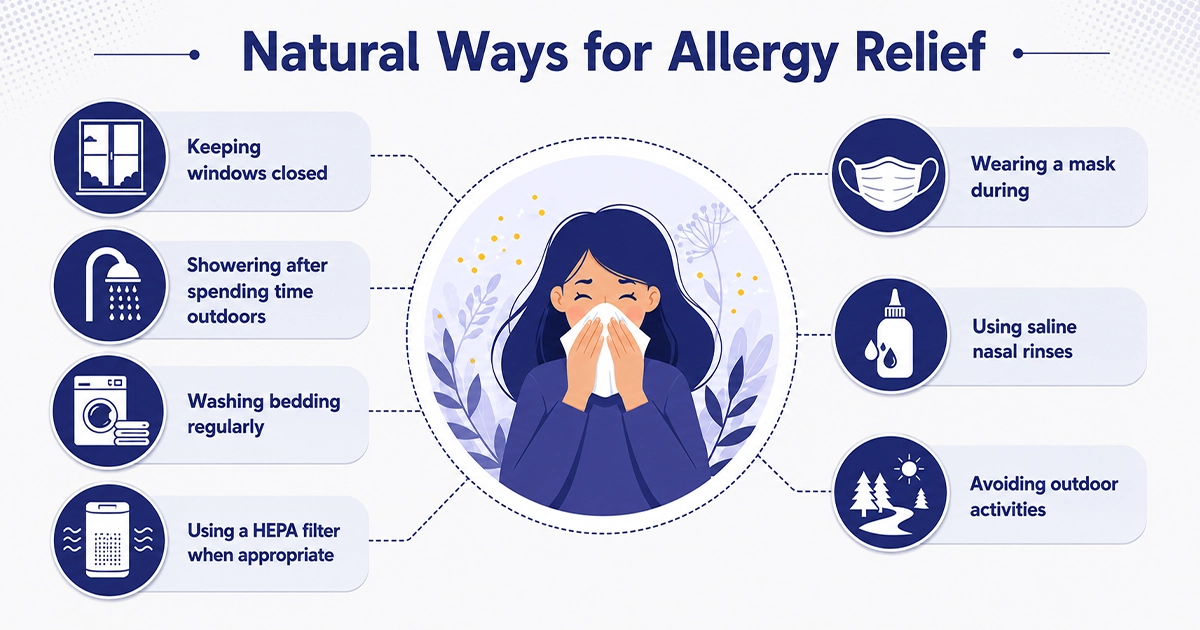
Some people look for natural allergy relief options before using medication. The most practical approaches are usually focused on reducing allergen exposure rather than relying on unproven supplements or herbal products.
Helpful measures can include:
- Keeping windows closed when pollen levels are high
- Showering after spending time outdoors
- Washing bedding regularly
- Using a HEPA filter when appropriate
- Wearing a mask during outdoor chores that stir up pollen
- Using saline nasal rinses
- Avoiding outdoor activities during periods of high pollen exposure
Evidence for many herbal or alternative allergy remedies is limited, so they should not automatically be considered safer or more effective than established treatments. Discuss supplements or alternative therapies with a healthcare professional before using them.
How to Manage Recurring Seasonal Allergies
If seasonal allergy symptoms return every year or remain difficult to control despite trigger avoidance and over-the-counter medication, professional evaluation may help identify the specific allergens involved. Allergy testing can help determine whether pollen, mold, or another allergen is contributing to your symptoms. Treatment can then be adjusted according to your triggers, symptom severity, and response to previous treatments.
1. Allergy Testing
Allergy testing can help identify which substances are triggering your immune response when the cause of recurring symptoms is unclear. Depending on your situation, testing may involve skin testing or blood testing for specific allergens. Knowing your triggers can make it easier to develop a targeted treatment and avoidance plan rather than treating symptoms without understanding what is causing them.
2. Allergy Immunotherapy
Allergen immunotherapy may be considered when seasonal allergies remain difficult to control with avoidance measures and medications. Allergy shots expose the body to carefully controlled amounts of specific allergens over time to reduce sensitivity. Because immunotherapy requires a structured treatment plan and is not appropriate for everyone, an allergy specialist can determine whether it is a suitable option.
How to Treat Seasonal Allergies in Babies
Treatment for babies requires extra caution because not every allergy medication or nasal product is appropriate for infants. Parents should not give an infant an over-the-counter allergy medicine solely based on the child’s symptoms without checking the product instructions or consulting a pediatric healthcare professional. Reducing exposure to suspected triggers and obtaining an accurate diagnosis are important first steps when allergy symptoms are persistent.
Can You Get Rid of Seasonal Allergies Permanently?
No guaranteed treatment permanently eliminates seasonal allergies for everyone. Avoiding triggers and using medications can control symptoms, while allergen immunotherapy may reduce sensitivity to specific allergens over time. If allergies repeatedly interfere with daily life despite standard treatment, discussing long-term options with an allergy specialist can help determine the most appropriate approach.
When to See a Doctor for Seasonal Allergies?
Consider medical evaluation when allergy symptoms interfere with sleep, work, school, exercise, or normal daily activities, or when over-the-counter treatments do not provide adequate relief.
You should also seek professional advice if:
- Symptoms are persistent or becoming more severe
- Allergy medicines are not working
- Medicines cause troublesome side effects
- You are unsure whether symptoms are allergies or another condition
- Allergies are worsening an existing condition such as asthma
- You frequently develop sinus problems along with your allergy symptoms
For non-life-threatening symptoms that need medical evaluation, East Houston Medical Center’s Urgent Care Services can be an appropriate option. For ongoing or scheduled evaluation, East Houston Medical Center’s Outpatient Services may also be available.
Can Allergy Shots Help Seasonal Allergies?
Yes. Allergy shots, also called allergen immunotherapy, can be an option for people whose seasonal allergies remain difficult to control despite medication or trigger avoidance. The treatment involves regular injections containing carefully controlled amounts of the allergens responsible for the person’s symptoms.
Over time, immunotherapy is intended to reduce the immune system’s reaction to those allergens. Treatment is typically a long-term process, so an allergist can determine whether it is appropriate based on the person’s symptoms, triggers, and medical history.
How to Prevent Seasonal Allergies?
You may not be able to eliminate seasonal allergens, but you can reduce exposure before symptoms become severe. Monitoring pollen levels, limiting outdoor exposure during high-pollen periods, keeping windows closed, and removing pollen from your skin and clothing can all help.
For people who know when their symptoms typically begin, preparing before the expected allergy season may also make symptoms easier to control. Your healthcare professional can help you determine whether starting an appropriate medication before symptoms become severe is suitable for you.
Seasonal Allergies vs. a Cold
Seasonal allergies and the common cold can cause similar symptoms, including a runny nose, congestion, sneezing, and cough. However, allergies commonly cause itchy or watery eyes and tend to occur after exposure to a specific allergen, while a cold is caused by a virus and usually develops after an incubation period.
Seasonal allergies can continue for weeks or recur throughout an allergy season, while a typical cold generally resolves within days. Fever and body aches are also more suggestive of a viral infection than seasonal allergies.
Get Seasonal Allergy Care at East Houston Medical Center
Seasonal allergies can often be managed with a combination of trigger avoidance, appropriate medication, and practical steps such as saline nasal rinses. If symptoms continue despite these measures or interfere with your daily life, professional evaluation can help identify the cause and determine a more effective treatment approach.
For medical evaluation of persistent or bothersome allergy symptoms, East Houston Medical Center provides access to healthcare services that can help you determine the next appropriate step. For non-life-threatening symptoms, you can explore Urgent Care Services or Outpatient Services depending on your care needs.
Frequently Asked Questions
How Quickly Do Seasonal Allergy Treatments Work?
The time required depends on the treatment. Some antihistamines can provide relatively quick symptom relief, while nasal corticosteroid sprays work best with consistent use and may take longer to reach their full effect. Follow the product instructions and ask a healthcare professional if symptoms remain uncontrolled.
What Is the Best Medicine for Seasonal Allergies?
There is no single medication that works best for everyone. Nasal corticosteroid sprays are highly effective for many people, while antihistamines can be useful for sneezing, itching, and runny nose. The right option depends on your symptoms, health history, and other medications.
Can Seasonal Allergies Go Away?
Seasonal allergies can change over time, but they commonly recur when a person is exposed to the allergens that trigger their immune response. Treatment can significantly reduce symptoms and improve quality of life, while allergen immunotherapy may reduce sensitivity for some people.
Are Seasonal Allergies Worse in the Morning?
They can be, particularly when outdoor pollen levels are high or when pollen has accumulated around the home. However, symptom severity varies by allergen, weather, location, and individual sensitivity. Checking local pollen levels can help identify patterns.
Can Seasonal Allergies Cause Coughing?
Yes. Allergies can cause coughing, particularly when nasal drainage runs down the back of the throat or when allergens irritate the airways. A persistent, severe, or wheezing cough should not automatically be attributed to allergies because asthma, infection, and other conditions can also cause coughing.