

Wheezing is a high-pitched whistling sound that occurs when air moves through narrowed or partially blocked airways. It is often easier to hear when breathing out, although it can occur during both inhalation and exhalation. Asthma, respiratory infections, allergies, smoking, and several other conditions can cause wheezing, so the best way to stop it depends on what is affecting the airways. If you are experiencing new or recurring wheezing, East Houston Medical Center can help you explore appropriate medical evaluation and care.
For mild symptoms, avoiding known triggers, using prescribed medication correctly, and practicing controlled breathing may help make breathing more comfortable. However, new, persistent, or recurring wheezing should not simply be treated as a minor symptom without considering its underlying cause. If breathing becomes difficult or symptoms worsen quickly, seek medical attention promptly.
What Causes Wheezing?
Wheezing happens when airflow through the respiratory tract becomes restricted. This narrowing can result from airway inflammation, muscle tightening, mucus buildup, an allergic reaction, or a blockage somewhere in the breathing passages.
Common causes include:
- Asthma: Airway inflammation and narrowing can cause wheezing, coughing, chest tightness, and shortness of breath.
- Respiratory infections: Colds, bronchitis, pneumonia, and other infections can increase airway inflammation or mucus.
- Allergies: Allergic reactions can cause airway swelling and, in severe cases, significant breathing difficulty.
- Smoking and irritants: Tobacco smoke, strong odors, chemicals, and air pollution can irritate the airways.
- COPD: Chronic airway and lung changes can cause persistent or recurring wheezing.
- Other conditions: Acid reflux, certain medications, heart conditions, and airway blockages can also cause wheezing.
Wheezing When Breathing Out
Wheezing when breathing out is common because narrowed airways can make it harder for air to leave the lungs during exhalation. The sound may be especially noticeable with asthma, respiratory infections, or other conditions that cause airway narrowing.
The timing and pattern of wheezing can provide useful information, but the sound alone cannot identify its cause. Wheezing that is new, persistent, recurrent, or accompanied by shortness of breath should be evaluated by a healthcare professional.
Coughing and Wheezing
Coughing/wheezing can occur together when the airways become irritated, inflamed, narrowed, or filled with excess mucus. Asthma is one common cause, but respiratory infections, allergies, COPD, and other conditions can also produce both symptoms.
Pay attention to when the symptoms occur, such as during exercise, at night, after exposure to allergens, or while recovering from a respiratory infection. Repeated coughing and wheezing should not be managed only with home remedies if the symptoms keep returning or interfere with normal breathing.
How Common Is Asthma in the United States?
Asthma is one of the important underlying conditions associated with recurring wheezing. According to the CDC, 8.6% of U.S. adults and 6.5% of children had asthma in 2024, representing millions of people across the country. This makes recognizing recurring wheezing and other asthma symptoms important, particularly when symptoms repeatedly occur with exercise, allergens, respiratory infections, or at night.
How to Stop Wheezing Immediately at Home
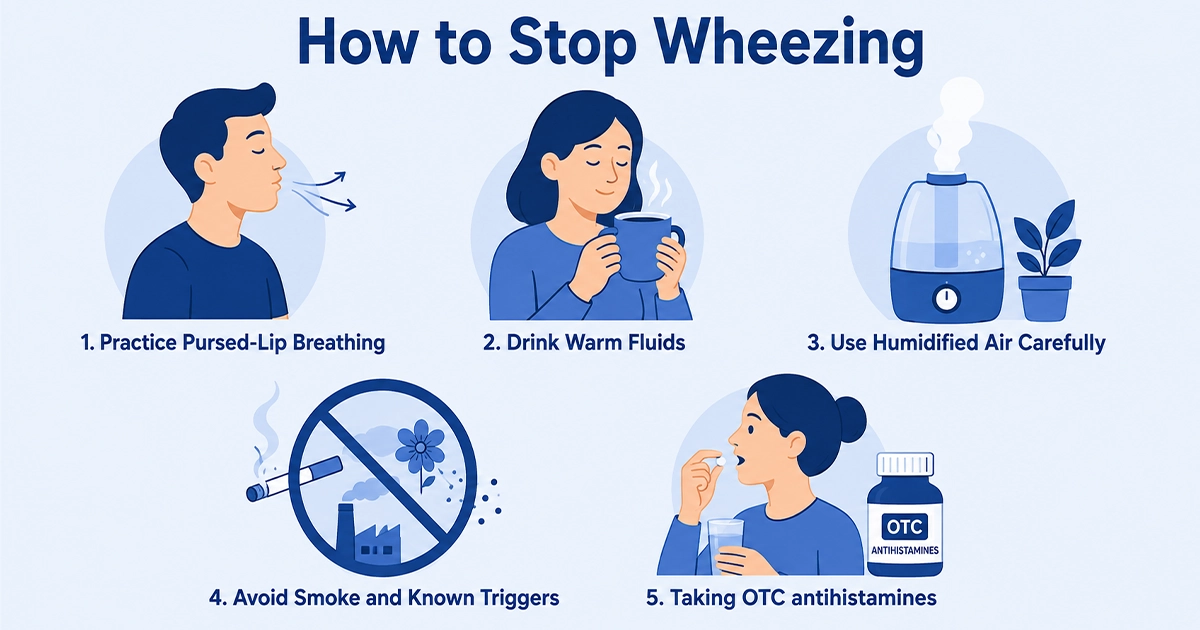
If your wheezing is mild and you are not experiencing severe breathing difficulty, several measures can help reduce irritation and make breathing more comfortable. These approaches are most useful when they address a known trigger or mild airway irritation rather than an untreated serious condition.
1. Practice Pursed-Lip Breathing
Pursed-lip breathing can help slow your breathing and give air more time to leave your lungs. Breathe in slowly through your nose, then gently exhale through lips held as if you are about to whistle. Keep the exhalation slow and controlled rather than forcing the air out. This technique may be particularly useful when wheezing is associated with asthma or breathing difficulty.
2. Drink Warm Fluids
Warm liquids may help loosen mucus when congestion or a respiratory infection is contributing to wheezing. Warm tea, broth, or other non-irritating fluids can also help maintain hydration while you recover. However, warm drinks should be considered a supportive measure rather than a treatment for conditions such as asthma or severe airway narrowing.
3. Use Humidified Air Carefully
Moist air may help soothe irritated airways and loosen thick mucus for some people. A humidifier or warm shower can be useful when dry air or congestion is contributing to symptoms, but humidifiers should be kept clean to prevent mold and microbial growth. If humidified air makes your symptoms worse, stop using it and consider medical advice.
4. Avoid Smoke and Known Triggers
Moving away from cigarette smoke, vaping aerosols, strong fragrances, dust, mold, pet dander, or other known triggers may help prevent wheezing from getting worse. If allergies or asthma are responsible, identifying and reducing exposure to personal triggers can be an important part of symptom management.
How to Get Rid of Wheezing
The most effective way to get rid of wheezing is to treat the condition causing it. Wheezing from a temporary respiratory infection may improve as the illness resolves, while asthma-related wheezing may require prescribed inhalers and long-term control of airway inflammation.
Treatment may involve:
- Prescription inhalers
- Bronchodilator medications
- Anti-inflammatory medicines
- Allergy treatment
- Treatment for an underlying respiratory infection when appropriate
- Oxygen or emergency treatment for severe breathing problems
If wheezing repeatedly returns, getting a diagnosis is more useful than repeatedly trying short-term remedies. Treating the underlying cause can reduce the likelihood of future episodes.
Wheezing Treatment
The appropriate wheezing treatment depends on the underlying cause rather than the sound itself. A healthcare professional may recommend different treatments for asthma, allergies, respiratory infections, COPD, or other conditions, so using the same remedy for every episode may not provide lasting relief.
Treatment can include:
- Asthma medications to control inflammation and relieve airway narrowing
- Bronchodilators to help open narrowed airways
- Allergy medications when allergies contribute to symptoms
- Treatment for infections when clinically appropriate
- Oxygen therapy or emergency treatment for severe breathing problems
Asthma Medications for Wheezing
When asthma is responsible for wheezing, Asthma medications may be used to relieve symptoms or control airway inflammation over time. Quick-relief medicines can open narrowed airways during symptoms, while controller medicines help reduce inflammation and lower the risk of future asthma problems.
Common treatment approaches include:
- Quick-relief inhalers: These can rapidly relax airway muscles and improve airflow during certain asthma symptoms.
- Inhaled corticosteroids: These reduce airway inflammation and are commonly used for long-term asthma control.
- Combination inhalers: Some people may need inhaled corticosteroids combined with a long-acting bronchodilator.
- Other controller medicines: Additional medications may be appropriate depending on the type and severity of asthma.
Do not start, stop, or change prescription asthma medication without discussing it with your healthcare professional.
Bronchodilator
A bronchodilator is a medicine that helps open the airways by relaxing the muscles surrounding them. This can make it easier for air to move through narrowed airways and may reduce wheezing when airway tightening is responsible for the symptom.
Short-acting bronchodilators may provide quick relief for certain asthma symptoms, while longer-acting bronchodilators can be part of longer-term treatment for some people. The appropriate medicine depends on the underlying condition and should be used according to a healthcare professional’s instructions.
OTC Treatments for Wheezing
There are OTC treatments for wheezing that may help with an underlying issue such as allergy symptoms, nasal congestion, or mild respiratory irritation, but there is no single over-the-counter medicine that treats every cause of wheezing. Some people may benefit from allergy medicines or supportive measures when those factors are contributing to their symptoms.
OTC products should not replace medical evaluation when wheezing is new, persistent, recurrent, or associated with shortness of breath. If you have asthma, follow your prescribed asthma treatment plan rather than relying on OTC products to manage an asthma flare.
How to Cure Wheezing Permanently
There is no single permanent cure for wheezing because wheezing is a symptom, not a disease. Whether it can be eliminated permanently depends on what is causing it. Wheezing caused by a temporary infection or irritant may disappear once the underlying problem resolves, while asthma or COPD may require ongoing management.
The best approach is to identify and treat the underlying cause rather than repeatedly suppressing the symptom. A healthcare professional may use your medical history, physical examination, lung-function testing, imaging, or other tests to determine why the wheezing is occurring.
How Is the Cause of Wheezing Diagnosed?
Diagnosing the cause of wheezing starts with a review of your symptoms, medical history, medications, possible triggers, and breathing pattern. A healthcare professional may listen to your lungs and ask when the wheezing started, what makes it worse, and whether it occurs continuously or comes and goes.
Depending on the suspected cause, testing may include:
- Spirometry or other lung-function tests
- Pulse oximetry
- Chest X-ray
- Blood tests
- Other respiratory or allergy testing when appropriate
How Can You Prevent Wheezing?
Preventing wheezing starts with identifying what triggers your symptoms and managing any underlying respiratory condition. If asthma or allergies are involved, following the recommended treatment plan and reducing exposure to known triggers can lower the likelihood of recurring symptoms.
Helpful strategies include:
- Avoiding tobacco smoke and secondhand smoke
- Limiting exposure to known allergens
- Reducing indoor dust and mold
- Avoiding strong chemical fumes and fragrances when they trigger symptoms
- Following prescribed asthma treatment
- Taking medications as directed
- Seeking evaluation for recurring or unexplained wheezing
When to See a Doctor for Wheezing?
Medical evaluation is appropriate when wheezing happens for the first time, keeps returning, has no clear explanation, or occurs with other breathing symptoms. A healthcare professional can determine whether asthma, an infection, allergies, COPD, or another condition is responsible.
Consider making an appointment if you experience:
- Recurring or unexplained wheezing
- Persistent coughing
- Shortness of breath
- Chest tightness
- Wheezing that interferes with sleep or activity
- Symptoms that repeatedly return after temporary improvement
For non-life-threatening respiratory symptoms, East Houston Medical Center’s Urgent Care Services can provide medical evaluation. For ongoing or scheduled care, East Houston Medical Center’s Outpatient Services may also be appropriate.
When Is Wheezing an Emergency?
Wheezing can sometimes indicate a serious breathing problem, especially when it develops suddenly or occurs with significant shortness of breath. Seek emergency medical care if you experience:
- Severe difficulty breathing
- Gasping for air
- Difficulty speaking because of breathlessness
- Blue or gray lips, face, or fingernails
- Confusion or reduced alertness
- Rapidly worsening breathing symptoms
- Wheezing after eating a food, taking a medication, or being stung by an insect
Call 911 or seek emergency medical care immediately if you are struggling to breathe or develop signs of a serious allergic reaction or severe breathing emergency.
Get Evaluated at East Houston Medical Center
Wheezing can result from something temporary, such as a respiratory infection, or from an underlying condition such as asthma, allergies, COPD, or another respiratory disorder. Knowing how to stop wheezing safely means addressing the underlying cause rather than simply trying to silence the sound.
For non-life-threatening respiratory symptoms, visit East Houston Medical Center to learn more about available care. You can explore Urgent Care Services for prompt evaluation or Outpatient Services for ongoing medical care. If you are experiencing a potentially life-threatening breathing emergency, seek emergency medical care immediately and call 911.
Frequently Asked Questions
How Can I Stop Wheezing Fast?
For mild wheezing, moving away from triggers, using prescribed rescue medication as directed, and practicing slow breathing may provide relief. However, severe or rapidly worsening wheezing requires prompt medical attention.
What Is the Most Common Cause of Wheezing?
Asthma is a common cause of recurring wheezing, but respiratory infections, allergies, COPD, smoking, mucus buildup, and other conditions can also cause it. The underlying cause cannot be determined from the sound alone.
Can Wheezing Go Away on Its Own?
Yes, mild wheezing may resolve when a temporary trigger or respiratory illness improves. However, recurring or unexplained wheezing should not be ignored because it may indicate an underlying condition that requires evaluation.
Does Wheezing Always Mean Asthma?
No. Asthma is one possible cause of wheezing, but infections, allergies, COPD, smoking, mucus buildup, and other conditions can also narrow or irritate the airways. A healthcare professional can help determine the cause when wheezing persists or returns.
Can I Use an Inhaler for Wheezing?
Only use an inhaler according to a healthcare professional’s instructions. A prescribed rescue inhaler may help when asthma or another diagnosed condition is causing airway narrowing, but using someone else’s inhaler is not recommended.