

Yes, asthma can have a genetic component, but it is not caused by a single inherited gene. Having a parent, sibling, or other close relative with asthma can increase your likelihood of developing the condition. However, genes are only part of the picture, and many people develop asthma because of a combination of genetic susceptibility and environmental exposures.
Asthma is a chronic condition that causes inflammation and narrowing of the airways, which can lead to symptoms such as wheezing, shortness of breath, chest tightness, and coughing. Understanding the connection between genetics, family history, and environmental factors can help explain why asthma affects some people and not others.
The Story Behind Genetic Asthma?
Asthma has a genetic component, meaning certain inherited traits can make a person more likely to develop the condition. However, asthma is considered a complex disease rather than a simple hereditary disorder because multiple genes can interact with environmental exposures and other risk factors.
This means you can have a genetic predisposition to asthma without necessarily developing it. Likewise, someone without a strong family history can still develop asthma after exposure to factors that affect the airways or immune system.
Family History of Asthma
A family history of asthma is one of the strongest known risk factors for developing the condition. The American Lung Association reports that having a parent with asthma can make a person three to six times more likely to develop asthma than someone without an affected parent.
Family history can reflect both inherited genetic differences and shared environments. Relatives may share genes, but they may also live in the same home, experience similar allergens, or have similar exposure to tobacco smoke, air pollution, mold, or other respiratory irritants.
Can Asthma Run in Families?
Yes, asthma can run in families, but this does not mean that a parent with asthma will automatically pass the condition to their child. Instead, children may inherit traits that increase their susceptibility to airway inflammation, allergies, or other processes associated with asthma.
Is Hereditary Asthma the Same as Genetic Asthma?
The terms hereditary asthma and genetic asthma are sometimes used interchangeably, but asthma is more complicated than a single inherited condition. A person can inherit a tendency that raises their risk, while environmental exposures and other factors help determine whether asthma actually develops.
Genetic Factors of Asthma
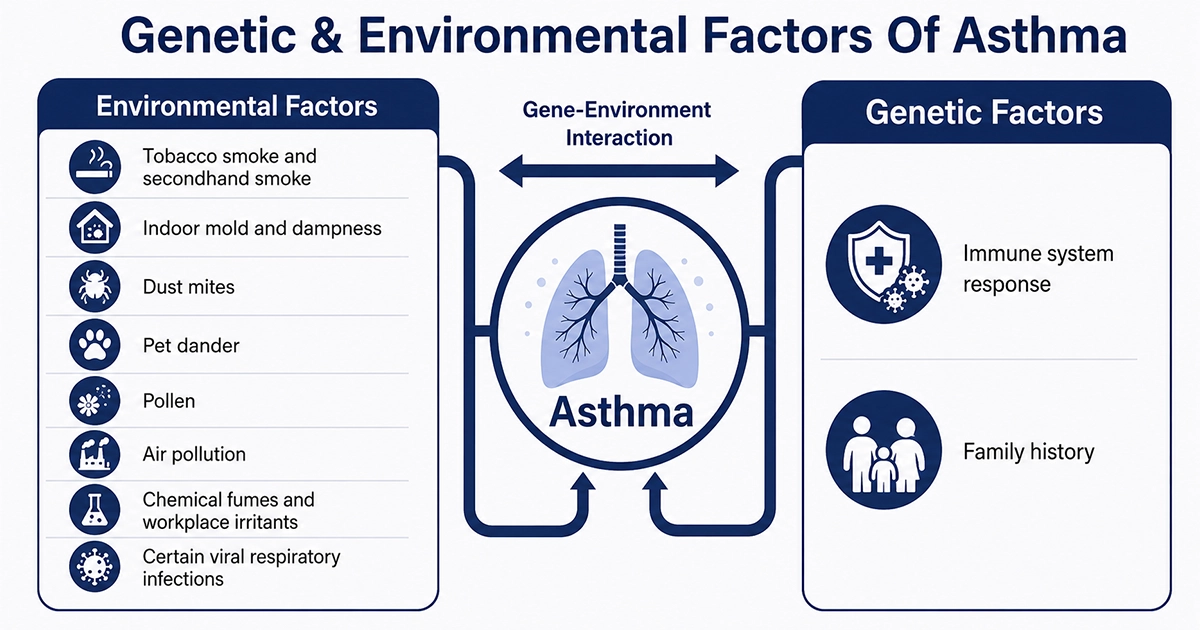
Asthma is influenced by multiple genetic factors rather than a single “asthma gene.” These inherited characteristics can affect how the immune system responds to allergens and how sensitive the airways are to different triggers. Key genetic factors associated with asthma may include:
- Immune system response: Inherited traits can influence how strongly the immune system reacts to allergens and other triggers.
- Allergic tendency: Genetic characteristics associated with allergies may increase susceptibility to asthma in some people.
- Airway sensitivity: Inherited differences can affect how the airways respond to allergens, irritants, and respiratory infections.
- Family history: Having close relatives with asthma can indicate a higher inherited susceptibility to developing the condition.
Genetic Predisposition
A genetic predisposition means that inherited characteristics can make someone more susceptible to developing a particular condition. With asthma, this susceptibility may involve the immune response, allergic tendencies, and how the airways react to different triggers. The NHLBI’s asthma causes and triggers information that explains how genetic and environmental factors can work together in asthma risk.
Having a genetic predisposition does not guarantee that a person will develop asthma. Environmental exposures, respiratory infections, allergies, and other factors can interact with inherited susceptibility throughout a person’s life.
Environmental Factors
Environmental factors can play a major role in asthma development and symptoms, particularly when someone already has an underlying susceptibility. Exposure to allergens, tobacco smoke, air pollution, mold, workplace chemicals, and certain respiratory infections can affect the airways or increase asthma risk.
Common environmental and exposure-related factors include:
- Tobacco smoke and secondhand smoke
- Indoor mold and dampness
- Dust mites
- Pet dander
- Pollen
- Air pollution
- Chemical fumes and workplace irritants
- Certain viral respiratory infections
The specific triggers that affect one person may not affect another. Identifying individual exposures can therefore be an important part of understanding and managing asthma.
How Do Genetics and the Environment Work Together?
Asthma often develops through an interaction between inherited susceptibility and environmental exposure rather than through genetics or environment alone. Someone may inherit characteristics that make their airways or immune system more reactive, while exposure to allergens, smoke, pollution, infections, or irritants may contribute to the development or worsening of asthma.
This gene-environment interaction also helps explain why two people from the same family may have different experiences with asthma. One person may develop symptoms while another does not, even though they share some of the same genetic and environmental factors.
What Are the Symptoms of Asthma?
The symptoms of asthma can vary from person to person and may occur intermittently or become worse during an asthma flare-up. Common symptoms are related to narrowed or inflamed airways and may become more noticeable during exercise, respiratory infections, exposure to allergens, or other triggers.
Common asthma symptoms include:
- Wheezing, especially when breathing out
- Shortness of breath
- Chest tightness
- Frequent or persistent coughing
- Coughing at night or early in the morning
- Coughing or breathing difficulty during exercise
Symptoms can be mild at one time and more severe at another. A healthcare professional can evaluate the pattern of symptoms and use appropriate testing to determine whether they may be related to asthma.
Asthma and Coughing
Asthma and coughing are closely connected because coughing can be one of the main symptoms of airway inflammation and narrowing. Some people experience a frequent cough at night or early in the morning, while others notice coughing primarily during exercise, respiratory infections, or exposure to specific triggers.
A persistent cough does not automatically mean someone has asthma because infections, allergies, reflux, and other conditions can also cause coughing. If coughing repeatedly occurs alongside wheezing, shortness of breath, or chest tightness, an evaluation by a healthcare professional can help determine the underlying cause.
Can You Develop Asthma Without a Family History?
Yes, you can develop asthma even if no one in your immediate family has the condition. Family history increases risk, but it is not required for asthma to develop because environmental exposures, allergies, respiratory infections, occupational hazards, and other factors can also contribute.
This is another reason asthma should not be considered a purely hereditary disease. A person without a known family history may still develop asthma after experiencing relevant exposures or other risk factors.
Can Asthma Be Prevented?
There is no guaranteed way to prevent asthma because its exact causes are not completely understood and many contributing factors cannot be controlled. However, reducing exposure to known irritants and allergens may help lower risk or reduce symptoms, particularly for people who are already susceptible.
Practical steps may include:
- Avoiding tobacco smoke and secondhand smoke
- Reducing exposure to known allergens
- Addressing dampness and mold
- Limiting exposure to air pollution when possible
- Identifying workplace chemicals or irritants that worsen breathing
- Following a healthcare professional’s recommendations for managing known asthma triggers
How Is Asthma Diagnosed?
Asthma cannot be diagnosed simply by looking at family history or symptoms alone. A healthcare professional typically considers the person’s symptoms, medical history, physical examination, and appropriate lung-function testing to determine whether the pattern is consistent with asthma.
If you have recurring wheezing, shortness of breath, chest tightness, or coughing, particularly at night, during exercise, or after exposure to specific triggers, it is worth discussing these symptoms with a healthcare professional. Early evaluation can help identify asthma and guide appropriate management.
Can Asthma Go Away?
Asthma is a chronic condition, so it does not have a permanent cure, but symptoms can become well controlled or disappear for periods of time. Some people, particularly children, may experience long periods without symptoms, but asthma can return later in life. Following a treatment plan, avoiding known triggers, and working with a healthcare professional can help keep symptoms under control
When to See a Doctor for Asthma Symptoms?
Recurring breathing symptoms should not automatically be attributed to allergies, a cold, or family history. Consider medical evaluation if you experience repeated wheezing, persistent coughing, shortness of breath, chest tightness, or symptoms that interfere with sleep, exercise, work, or daily activities.
Seek Emergency Care If You Have:
- Severe difficulty breathing
- Rapidly worsening breathing symptoms
- Inability to speak normally because of breathlessness
- Bluish or gray lips, face, or skin
- Severe symptoms that do not improve with your prescribed rescue treatment
For non-life-threatening respiratory symptoms, East Houston Medical Center’s Urgent Care Services can provide medical evaluation. For ongoing or scheduled care, East Houston Medical Center’s Outpatient Services may also be appropriate.
Get Asthma Symptoms Evaluated at East Houston Medical Center
Asthma is influenced by both genetic susceptibility and environmental factors, so having a family history does not mean asthma is inevitable, and having no family history does not rule it out. If you or your child has recurring coughing, wheezing, shortness of breath, or chest tightness, getting an appropriate medical evaluation can help identify the cause.
For non-life-threatening symptoms, visit East Houston Medical Center to learn more about available medical services. You can also explore Urgent Care Services for prompt evaluation or Outpatient Services for ongoing medical care.
Frequently Asked Questions
Is Asthma Genetic or Hereditary?
Asthma has a genetic component and can run in families, but it is not caused by a single inherited gene. Having a family history can increase your risk, while environmental exposures and other factors also influence whether asthma develops.
If My Parents Have Asthma, Will I Get It?
Not necessarily. Having a parent with asthma increases your risk, but it does not mean you will definitely develop the condition. Your overall risk depends on genetics, environmental exposures, allergies, infections, and other factors.
Can Asthma Be Cured?
There is currently no cure that permanently eliminates asthma, but the condition can often be controlled with appropriate treatment and trigger management. Some people may have long periods without symptoms, but asthma can remain a chronic condition and symptoms may return.
Can You Get Asthma as an Adult?
Yes, asthma can develop at any age, including adulthood, even if you did not have asthma as a child. Adult-onset asthma may be associated with allergies, respiratory infections, workplace exposures, smoking, air pollution, or other factors, and recurring breathing symptoms should be evaluated by a healthcare professional.
Is Coughing a Sign of Asthma?
Yes. Coughing is a common symptom of asthma and may be worse at night, early in the morning, during exercise, or after exposure to certain triggers. However, many other conditions can also cause coughing, so persistent or recurring cough should be evaluated when appropriate.