

When you are dealing with sudden nausea, vomiting, diarrhea, and stomach cramps, it can be exhausting and worrying, especially when you do not know when you will feel normal again. How long does the stomach flu last? Most cases of viral gastroenteritis improve within a few days, with norovirus symptoms commonly lasting about 1 to 3 days.
But the exact recovery time can vary depending on the virus, your age, and your overall health. Some infections can cause symptoms for a week or longer, and diarrhea or vomiting that persists can quickly lead to dehydration. If you cannot keep fluids down, have severe abdominal pain, bloody or black stools, frequent vomiting, or signs of dehydration, prompt medical attention may be necessary.
What Is The Stomach Flu?
The “stomach flu” is a common name for viral gastroenteritis, an infection that causes inflammation of the stomach and intestines. Despite its name, it is not influenza and usually causes diarrhea, vomiting, nausea, stomach cramps, and sometimes fever or body aches.
Norovirus is one of the most common causes, although other viruses can also trigger gastroenteritis. A large systematic review found that norovirus was detected in about 18% of acute gastroenteritis cases worldwide, making it an important cause of this illness.
Dangerous Symptoms Of The Stomach Flu
Most cases of viral gastroenteritis resolve without serious complications, but severe vomiting and diarrhea can cause significant fluid and electrolyte loss. Seek medical advice if symptoms are intense, worsening, or failing to improve, particularly if you have a higher risk of complications.
- Severe or persistent vomiting.
- Frequent watery diarrhea that is difficult to control.
- Blood or black material in the stool.
- Severe or worsening abdominal pain.
- High or persistent fever.
- Very little or no urination.
- Dry mouth, severe thirst, or unusual weakness.
- Dizziness or lightheadedness, particularly when standing.
- Confusion, unusual sleepiness, or difficulty staying alert.
- Symptoms that continue to worsen instead of gradually improving.
Stomach Flu Timeline: What To Expect
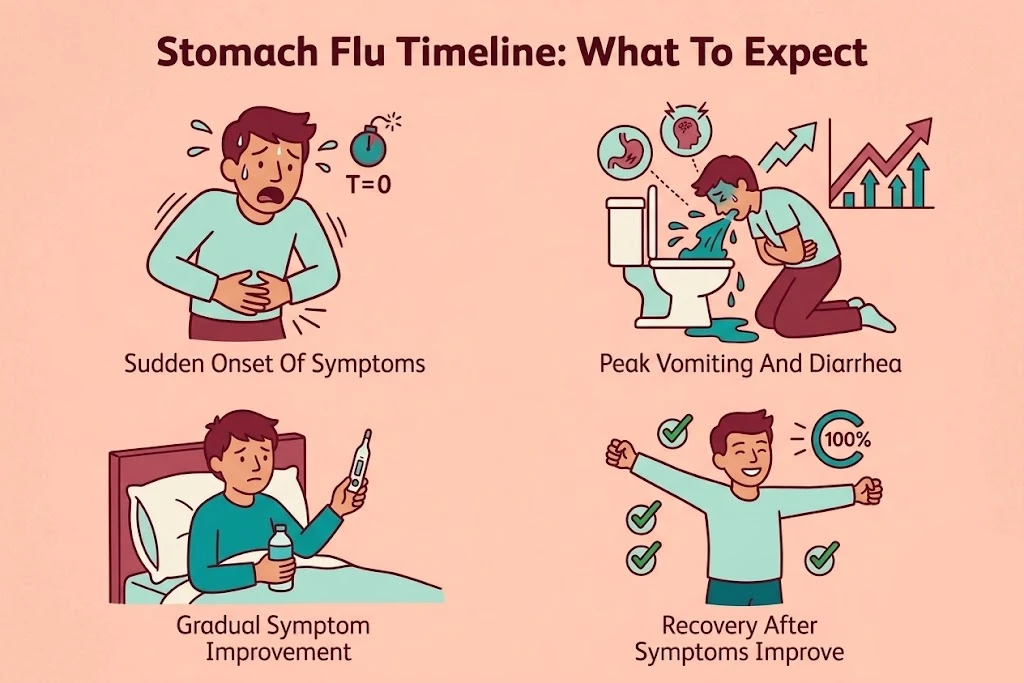
Getting hit with vomiting, diarrhea, and stomach cramps can leave you wondering whether the illness is almost over or likely to continue. The stomach flu often begins suddenly, and the most intense symptoms can make even drinking fluids difficult. Norovirus, one of the leading causes, usually improves within 1 to 3 days, although recovery can take longer in some people.
Sudden Onset Of Symptoms
Stomach flu symptoms may appear relatively quickly after exposure to an infectious virus. With norovirus, symptoms commonly begin 12 to 48 hours after exposure and may include nausea, vomiting, watery diarrhea, abdominal cramps, and sometimes fever or body aches.
Peak Vomiting And Diarrhea
The first part of the illness can be particularly difficult because vomiting and diarrhea may occur repeatedly. During this period, losing more fluid than you can replace can increase the risk of dehydration, especially in young children, older adults, and people with other medical conditions.
Gradual Symptom Improvement
As the infection begins to settle, vomiting and nausea generally become less frequent, while appetite and energy gradually return. Most otherwise healthy people with norovirus recover within 1 to 3 days, although some infections can cause symptoms for several additional days.
Recovery After Symptoms Improve
Feeling better does not necessarily mean the virus has completely stopped spreading. Norovirus can remain in stool for 2 weeks or more after recovery, so careful handwashing and avoiding food preparation for at least 48 hours after symptoms stop can help reduce transmission.
What Causes The Stomach Flu?
Although the symptoms can feel similar from one infection to another, several viruses can cause viral gastroenteritis. These infections spread easily through contaminated food or water, infected people, vomit or stool particles, and contaminated surfaces. Identifying the likely cause can be difficult without testing, because many viral infections produce similar digestive symptoms.
- Norovirus: Norovirus is a highly contagious cause of vomiting and diarrhea and can affect people of all ages. It commonly spreads through contaminated food or water, infected people, and contaminated surfaces.
- Rotavirus: Rotavirus can cause severe vomiting and watery diarrhea, particularly in infants and young children. Vaccination has substantially reduced severe rotavirus disease in countries where routine childhood vaccination is available.
- Adenovirus: Certain adenovirus types can cause gastroenteritis, particularly in children. Infection may produce diarrhea, vomiting, nausea, stomach discomfort, and fever.
- Astrovirus: Astrovirus is another viral cause of gastroenteritis that tends to affect young children, older adults, and people with weakened immune systems more severely.
- Contaminated Food Or Water: Viruses can enter food or water through contamination and cause gastrointestinal illness after ingestion. Norovirus, for example, can spread through contaminated food, water, shellfish, or contact with infected people.
When To Go To The ER
Most stomach flu cases can be managed with supportive care, but severe fluid loss can become a medical emergency. Dehydration and electrolyte abnormalities are important complications of significant vomiting and diarrhea, and severe cases may require intravenous fluids. If you are unable to replace lost fluids or develop signs of serious illness, an emergency evaluation can help prevent complications.
- You cannot keep even small amounts of fluid down because of repeated vomiting.
- You have fainting, severe dizziness, confusion, or difficulty staying awake.
- You have signs of severe dehydration, such as minimal or absent urination.
- You have severe or rapidly worsening abdominal pain.
- You have significant blood in your vomit or stool.
- You develop severe weakness or symptoms suggesting a serious electrolyte imbalance.
- Your symptoms are becoming significantly worse rather than improving.
- You are at increased risk of complications and cannot maintain adequate hydration.
How To Treat Stomach Flu
When vomiting and diarrhea leave you drained, the priority is replacing the fluids and electrolytes your body is losing. There is usually no specific antiviral medication for common viral gastroenteritis, so treatment focuses on supportive care while your immune system clears the infection.
Replace Fluids And Electrolytes
Rehydration is the most important part of treating stomach flu, particularly when diarrhea or vomiting is frequent. Take small, frequent sips of water or an oral rehydration solution rather than drinking a large amount at once. Oral rehydration solutions provide water and important electrolytes that are lost during diarrhea and vomiting.
Eat When You Can Tolerate Food
You do not need to force yourself to eat while you are actively vomiting. Once nausea improves, gradually return to foods you can tolerate and focus on maintaining adequate fluid intake. Smaller meals may be easier to manage initially than large or heavy meals.
Rest And Allow Your Body To Recover
Vomiting, diarrhea, poor fluid intake, and disrupted sleep can leave you extremely tired. Getting adequate rest can help you manage the illness while your body recovers. Avoid strenuous activity until vomiting and significant diarrhea have settled and you are drinking and urinating normally.
Prevent The Infection From Spreading
Because viruses such as norovirus are highly contagious, preventing transmission is an important part of managing illness. Wash your hands thoroughly with soap and water, clean contaminated surfaces, and avoid preparing food for others while sick and for at least 48 hours after symptoms stop.
Get Medical Treatment For Severe Dehydration
If vomiting or diarrhea prevents you from replacing lost fluids, medical treatment may be necessary. Healthcare professionals can assess dehydration and electrolyte problems and may provide intravenous fluids when oral rehydration is not sufficient. This is especially important when severe symptoms affect children, older adults, or people with other health conditions.
Get Evaluated For Severe Stomach Flu Symptoms
Stomach flu often improves on its own, but frequent vomiting and diarrhea can cause significant dehydration and electrolyte loss, especially when you cannot keep fluids down. Knowing when to seek medical care can help prevent complications when symptoms become severe or do not improve as expected.
For non-life-threatening symptoms, visit East Houston Medical Center to learn more about available care. You can explore Urgent Care Services for prompt evaluation or Outpatient Services for ongoing medical care. If you have severe dehydration, confusion, fainting, severe abdominal pain, bloody vomit or stool, or another potentially life-threatening emergency, seek emergency medical care immediately and call 911.
Key Takeaways
- Stomach flu, or viral gastroenteritis, commonly causes vomiting, diarrhea, nausea, and stomach cramps.
- Most stomach flu cases last about 1 to 3 days, although some infections may take longer to resolve.
- Frequent vomiting and diarrhea can quickly lead to dehydration and electrolyte loss.
- Drinking small, frequent amounts of fluids can help replace the water and electrolytes your body loses.
- Severe symptoms, persistent vomiting, or an inability to stay hydrated may require prompt medical care.
- Good hand hygiene and surface cleaning can help prevent stomach flu from spreading to others.
What Kills The Stomach Flu Virus?
Norovirus and other stomach flu viruses are difficult to eliminate from surfaces with regular household cleaners. Use an EPA-registered disinfectant effective against norovirus, or a properly prepared bleach solution, and wash hands thoroughly with soap and water.
Is The Stomach Flu Contagious?
Yes, the stomach flu is highly contagious, especially when caused by norovirus. It can spread through contaminated food, surfaces, vomit, stool, and close contact with an infected person, even shortly after symptoms improve.
How Do I Prevent The Stomach Flu?
Wash your hands with soap and water, disinfect contaminated surfaces, wash laundry carefully, and avoid preparing food for others while sick. Avoid close contact with infected people and stay home while experiencing symptoms.