

Norovirus is a very contagious virus that causes sudden vomiting, diarrhea, nausea, and stomach pain. It is often called a stomach bug or “stomach flu,” but it is not related to influenza, the virus that causes respiratory flu. Norovirus causes acute gastroenteritis, which means inflammation of the stomach and intestines.
However, repeated vomiting and diarrhea can cause dehydration, which may become serious, especially in young children, older adults, people with weakened immune systems, and people with certain health conditions.
What Is Norovirus?
Norovirus is a group of highly contagious viruses that infect the digestive system and cause acute gastroenteritis. It can affect people of any age and can spread quickly through households, schools, healthcare settings, restaurants, cruise ships, and other places where people have close contact.
Norovirus is the leading cause of vomiting and diarrhea in the United States. There are many different types of norovirus, so having one infection does not provide complete protection against future infections. A person can become infected more than once during their lifetime.
What Causes Norovirus?
Norovirus illness occurs when tiny particles of feces or vomit from an infected person enter another person’s mouth. This can happen through contaminated food, water, hands, objects, or surfaces. Only a small amount of norovirus can make someone sick, which helps explain why the infection spreads so easily.
Common Ways Norovirus Spreads
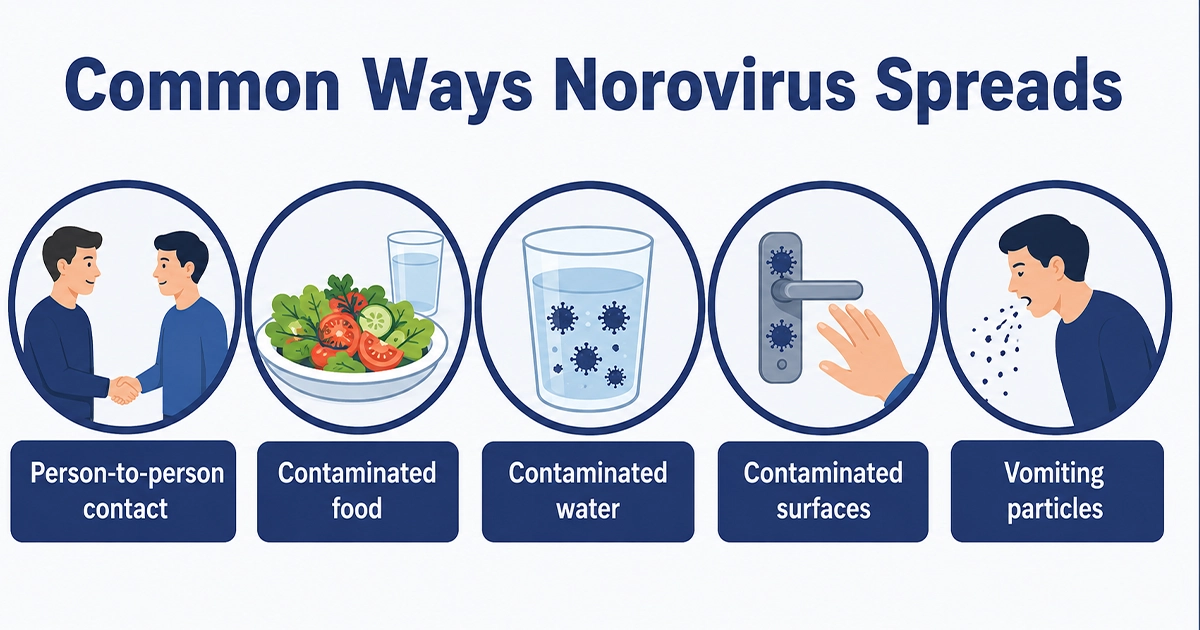
Norovirus can spread through several everyday forms of exposure:
- Person-to-person contact: Close contact with someone who has norovirus can transfer the virus.
- Contaminated food: Food can become contaminated when handled by an infected person or exposed to contaminated surfaces.
- Contaminated water: Drinking or recreational water can carry norovirus when it becomes contaminated.
- Contaminated surfaces: Touching contaminated objects and then touching your mouth can lead to infection.
- Vomiting particles: Tiny droplets from vomit can contaminate nearby food, surfaces, or another person’s mouth.
Is Norovirus the Stomach Flu?
Norovirus is often called the stomach flu, but the name is misleading because norovirus is not related to influenza. Influenza mainly affects the respiratory system, while norovirus causes acute gastroenteritis involving the stomach and intestines. The term “stomach bug” is also commonly used for norovirus and other infections that cause vomiting and diarrhea.
What Are the Stomach Bug Symptoms?
Norovirus symptoms often begin suddenly and mainly affect the stomach and intestines. The most common stomach bug symptoms involve vomiting, diarrhea, and nausea, although some people may also develop fever, headache, or body aches.
Common symptoms include:
- Nausea: A feeling that you may vomit.
- Vomiting: Sudden or repeated vomiting is a common sign of norovirus.
- Watery diarrhea: Loose or watery stools may occur several times a day.
- Stomach pain or cramps: Abdominal discomfort can occur along with diarrhea or vomiting.
- Fever: Some people develop a low-grade fever.
- Headache: Headaches may occur during the infection.
- Body aches: Some people experience mild muscle or body aches.
- Tiredness: Fluid loss and the infection itself can leave you feeling weak or tired.
Symptoms can vary from person to person. Some people may have more vomiting, while others may mainly experience diarrhea.
What Do Diarrhea, Vomiting, and Fever Mean With Norovirus?
Diarrhea, vomiting, and fever can occur together during a norovirus infection, although fever is usually less prominent than vomiting and diarrhea. Sudden watery diarrhea and repeated vomiting are the symptoms most strongly associated with norovirus, while some people also experience nausea, stomach cramps, headache, or body aches.
Because similar symptoms can occur with food poisoning, bacterial infections, and other causes of gastroenteritis, symptoms alone cannot always confirm norovirus. Severe, persistent, or unusual symptoms should be evaluated by a healthcare professional.
What Is the Norovirus Incubation Period?
The norovirus incubation period is usually 12 to 48 hours after exposure. This means you can come into contact with the virus and feel completely well for part of a day or longer before symptoms suddenly appear.
The short incubation period helps explain why norovirus can spread quickly through households, schools, healthcare facilities, and other group settings. If several people develop vomiting and diarrhea within a short period, norovirus may be one possible cause.
How Long Does Norovirus Last?
Norovirus symptoms usually last about 1 to 3 days, and most people recover without specific medical treatment. Vomiting and diarrhea generally improve as the infection runs its course, although some people may feel tired or have changes in bowel habits for a little longer.
Even after symptoms improve, the virus can remain in stool for two weeks or more. This means you may still spread norovirus after you feel better, making careful handwashing and food-safety practices important during recovery.
How Serious Is Norovirus?
For most healthy people, norovirus is a short-term illness that improves within a few days. The main concern is dehydration caused by repeated vomiting and diarrhea, which can become serious if the body loses more fluid than it can replace. Young children, older adults, people with weakened immune systems, and people with certain health conditions have a higher risk of complications.
What Are the Signs of Dehydration?
Dehydration is the main complication to watch for during norovirus illness. Frequent vomiting and diarrhea can cause the body to lose water and electrolytes faster than they can be replaced.
Common signs of dehydration include:
- Dry mouth and throat
- Extreme thirst
- Urinating less often than usual
- Dark-colored urine
- Dizziness or light-headedness
- Unusual tiredness or weakness
- Few or no tears when crying in children
- Difficulty keeping fluids down
Severe dehydration may require medical treatment, including fluids given through a vein. Seek medical care promptly if you or your child cannot drink enough fluids, is urinating much less than usual, or develops significant dizziness or weakness.
Who Is at Higher Risk From Norovirus?
Anyone can get norovirus, but some people have a higher risk of serious dehydration or complications. These include young children, older adults, people with weakened immune systems, and people with certain underlying health conditions. People who cannot drink enough fluids because of repeated vomiting are also at greater risk.
If someone in a higher-risk group develops repeated vomiting or diarrhea, monitor fluid intake and signs of dehydration closely. Medical advice may be appropriate sooner rather than waiting for symptoms to become severe.
How Is Norovirus Diagnosed?
Healthcare providers can often recognize norovirus based on symptoms, especially when several people develop similar symptoms or there is a known outbreak. Routine testing is not always needed for an individual with a mild illness because treatment usually focuses on hydration and symptom management.
Laboratory testing can detect norovirus in stool samples and may be used when confirmation is needed, particularly during outbreaks or public health investigations. PCR-based testing is commonly used to identify norovirus genetic material.
How Is Norovirus Treated?
There is no specific medicine that cures a routine norovirus infection. Treatment focuses on replacing fluids and electrolytes lost through vomiting and diarrhea while allowing the body to recover. Most people improve within 1 to 3 days without specific medical treatment.
If vomiting makes drinking difficult, take small, frequent sips instead of drinking a large amount at once. Oral rehydration solutions can help replace fluids and electrolytes, especially when diarrhea or vomiting is significant. Rest can also help while you recover.
Can Antibiotics Treat Norovirus?
No. Antibiotics treat bacterial infections, not viruses, so they do not cure norovirus. Taking antibiotics when they are not needed can also cause unwanted side effects and contribute to antibiotic resistance. A healthcare professional can determine whether another bacterial infection requires antibiotic treatment.
What Should You Eat and Drink With Norovirus?
The main goal during norovirus illness is to replace fluids and electrolytes lost through vomiting and diarrhea. If drinking makes nausea worse, take small sips frequently instead of trying to drink a large amount at once. Oral rehydration solutions can be useful when fluid loss is significant.
When your appetite returns, you can generally return to your normal diet as tolerated. A highly restricted diet or fasting is not usually needed for viral gastroenteritis. Start with foods you can comfortably tolerate and increase your intake as your symptoms improve.
How Can You Prevent Norovirus?
Norovirus is highly contagious, but good hygiene and food-safety practices can reduce the risk of infection. Wash your hands thoroughly with soap and water, clean contaminated surfaces, wash potentially contaminated laundry carefully, and avoid preparing food for others while you are sick. Hand sanitizer alone does not work well against norovirus.
1. Wash Your Hands With Soap and Water
Wash your hands with soap and water for at least 20 seconds, especially after using the bathroom, changing diapers, caring for someone who is sick, and before preparing or eating food. Hand sanitizer can be used as an additional measure, but it should not replace proper handwashing when preventing norovirus.
2. Clean and Disinfect Contaminated Surfaces
Clean and disinfect surfaces that may have been contaminated by vomit or diarrhea, especially bathroom fixtures, counters, and frequently touched objects. Wash contaminated clothing, towels, and bedding carefully to reduce the chance of spreading the virus to other people.
3. Avoid Preparing Food While Sick
If you have norovirus symptoms, do not prepare or handle food for other people. CDC recommends waiting at least 48 hours after symptoms stop before returning to food handling or similar activities where you could expose others.
How Long Does Norovirus Live on Surfaces?
Norovirus can remain infectious on contaminated surfaces long enough to contribute to transmission, which is why cleaning and disinfection are important after vomiting or diarrhea. There is not one reliable number of hours that applies to every surface or environment because survival can vary with factors such as the surface, temperature, moisture, and cleaning conditions.
Instead of relying on a specific “survival time,” treat potentially contaminated surfaces as a transmission risk and clean them promptly using a disinfectant effective against norovirus. Wash your hands with soap and water after cleaning, and handle contaminated laundry carefully.
How Long Is Norovirus Contagious?
Norovirus is most contagious while a person has symptoms, especially during vomiting, and during the first few days after they start feeling better. However, the virus can continue to be shed in stool for two weeks or more, so a person may still spread the infection after symptoms have ended.
For practical prevention, CDC recommends staying home while sick and avoiding food preparation or caring for others for at least 48 hours after symptoms stop. Continue careful handwashing and surface cleaning after that period because norovirus can remain in stool for longer.
When to See a Doctor For Norovirus?
Most people can recover from norovirus at home, but medical care may be needed when symptoms are severe or you cannot replace the fluids you are losing. Seek medical advice for severe or persistent vomiting, prolonged diarrhea, significant stomach pain, bloody stool, signs of dehydration, or an inability to drink enough fluids.
Young children, older adults, pregnant people, people with weakened immune systems, and people with other health conditions may need medical evaluation sooner. Severe dehydration can require hospital treatment, so do not wait if symptoms of significant dehydration develop.
For non-life-threatening illnesses that need timely evaluation, you can learn more about East Houston Medical Center’s urgent care services.
Norovirus vs. Food Poisoning: Are They the Same?
Norovirus can cause foodborne illness, but not all food poisoning is caused by norovirus. Foodborne illness can result from viruses, bacteria, parasites, or toxins. Norovirus may spread through contaminated food or water, while other foodborne infections can have different causes and symptom patterns.
Sudden vomiting and watery diarrhea that begin 12 to 48 hours after exposure are common with norovirus, but symptoms alone cannot always identify the exact cause. Bloody diarrhea, severe dehydration, persistent symptoms, or severe pain should be medically evaluated.
Norovirus Care at East Houston Medical Center
If vomiting, diarrhea, or other norovirus infection symptoms are severe, persistent, or causing signs of dehydration, timely medical evaluation can help determine the right next step. Most cases improve within a few days, but people at higher risk may need closer monitoring. East Houston Medical Center offers urgent care services for non-life-threatening illnesses and can help evaluate symptoms that need medical attention.
Frequently Asked Questions
Is Norovirus Contagious?
Yes. Norovirus is highly contagious and can spread through infected people, contaminated food or water, surfaces, and particles from vomit. It spreads especially easily in shared spaces.
What Are the First Symptoms of Norovirus?
The first symptoms often include nausea, sudden vomiting, watery diarrhea, and stomach cramps. Some people may also develop fever, headache, body aches, or tiredness.
Can You Have Norovirus Without Vomiting?
Yes. A norovirus infection can cause diarrhea, nausea, or stomach cramps without vomiting. Symptoms vary between people, so not having vomiting does not rule out norovirus.
Is Norovirus Airborne?
Norovirus is not generally considered an airborne infection. However, particles from vomit can become airborne briefly and contaminate nearby surfaces, food, or people.
How Long Is Norovirus Contagious?
Norovirus is most contagious while you have symptoms and during the first few days after recovery. The virus can remain in stool for two weeks or more, so careful hygiene should continue after symptoms stop.