
A sore throat can be uncomfortable and concerning, especially when you are unsure whether it is something that will pass on its own or requires medical attention. Strep throat is a common bacterial throat infection that can affect both children and adults, and knowing more about it can help you make informed decisions about your health.
If you are wondering how you get strep throat? It is important to understand how this infection is acquired and what factors can increase the chance of becoming infected. Knowing when professional evaluation is necessary can also help reduce complications and prevent the infection from spreading to others.
Dangerous Strep Throat Symptoms That Need Medical Attention
Most cases of strep throat can be treated effectively when diagnosed promptly, but certain warning signs may indicate a serious infection or complication. Seek medical attention for severe or rapidly worsening symptoms, particularly those affecting swallowing, breathing, or the ability to open your mouth.
A large prospective study of 14,610 adults with acute sore throat found that 1.3% developed complications, emphasizing the importance of recognizing concerning changes.
- Difficulty breathing or a feeling that your airway is becoming blocked.
- Inability to swallow liquids, saliva, or food.
- Drooling because swallowing has become difficult.
- Severe or rapidly worsening throat pain, especially on one side.
- Significant swelling in the throat, tonsils, neck, or jaw.
- A muffled or unusually altered voice.
- Difficulty opening your mouth fully.
- Severe dehydration, dizziness, or very little urine.
- High or persistent fever accompanied by worsening illness.
- Severe neck stiffness, swelling, or difficulty moving the neck.
- Confusion, extreme weakness, or signs of a serious systemic infection.
Reasons Why You Get Strep Throat
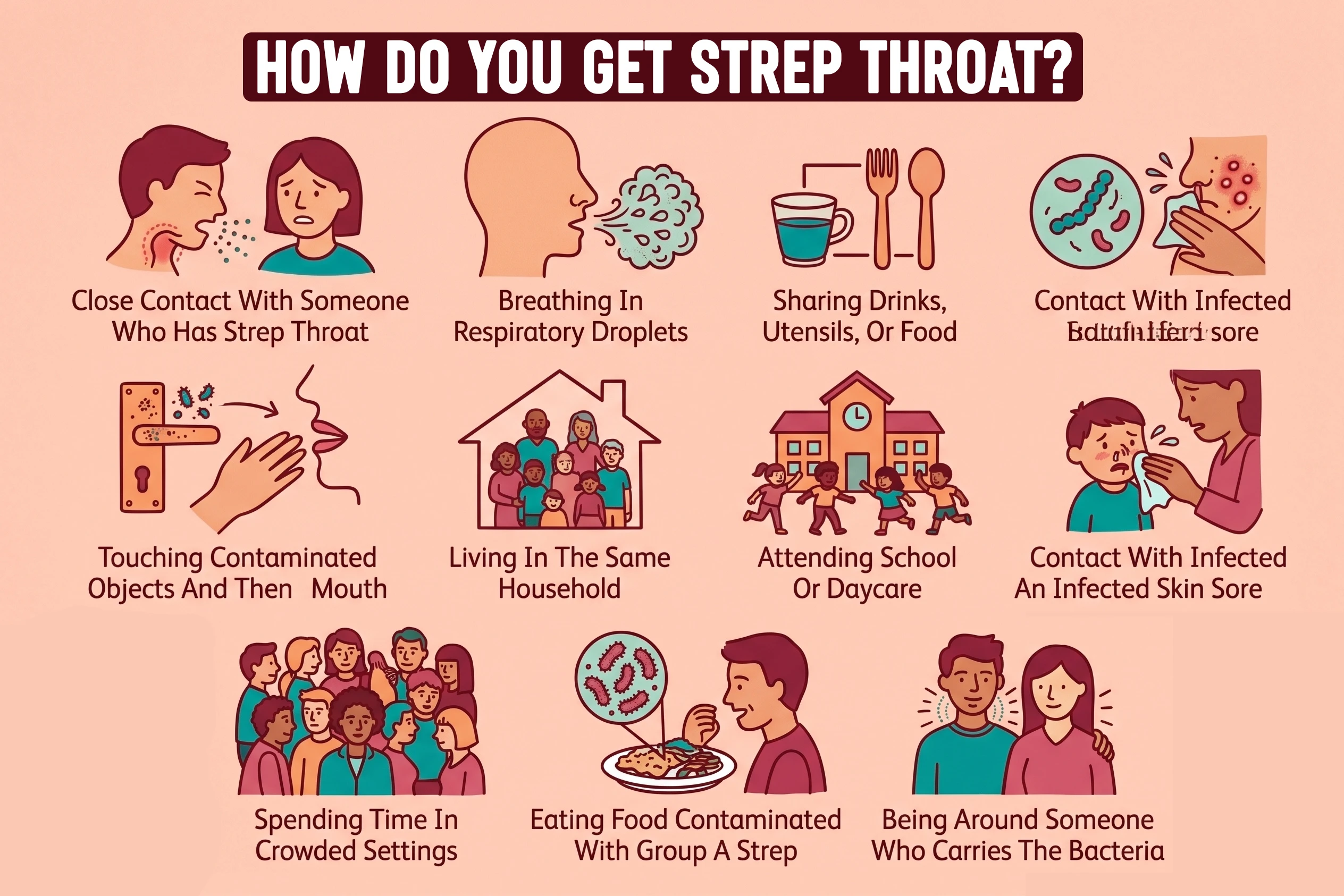
Getting strep throat can be frustrating, especially when you are not sure how you were exposed or why you became sick. Several everyday situations can increase your chance of coming into contact with the infection, particularly when you spend time around other people. Knowing these risk factors can help you recognize possible exposure and take steps to reduce the chance of spreading or developing the infection.
Close Contact With Someone Who Has Strep Throat
Close contact with a person who has strep throat is the most common risk factor for becoming infected. The bacteria can spread through respiratory droplets and secretions when an infected person talks, coughs, or sneezes. Household members, caregivers, and people who spend considerable time together may therefore have greater exposure.
Breathing In Respiratory Droplets
Group A Strep can spread through tiny respiratory droplets released when an infected person coughs, sneezes, or talks. Another person may become infected after inhaling droplets containing the bacteria. This is one reason respiratory infections can spread quickly among people who spend time together indoors.
Sharing Drinks, Utensils, Or Food
Sharing drinking glasses, cups, plates, or utensils with someone carrying Group A Strep can increase exposure to infected saliva. The bacteria can be transmitted through contact with respiratory secretions, including saliva. Avoiding shared eating and drinking items is especially important when someone is known to have strep throat.
Touching Contaminated Objects And Then Your Mouth
Although direct person-to-person transmission is more important, Group A Strep can potentially spread when respiratory secretions contaminate objects or surfaces. Touching these items and then touching your mouth or nose can provide a route for exposure. Good hand hygiene can help reduce this risk.
Living In The Same Household
People living with someone who has strep throat have frequent opportunities for close contact and exposure to respiratory secretions. The infection commonly spreads among household members because they share living spaces, meals, and daily activities. Children with strep can also expose parents and siblings.
Attending School Or Daycare
Schools and daycare centers can provide frequent opportunities for close contact between children. Strep throat is particularly common among children 5 through 15 years old, and crowded settings can make transmission easier. Regular handwashing and avoiding shared personal items can help limit spread.
Spending Time In Crowded Settings
Crowded environments can increase opportunities for Group A Strep to pass from one person to another. Settings such as schools, daycare centers, shelters, and military training facilities can facilitate transmission because people spend extended periods in close proximity.
Contact With Infected Saliva Or Nasal Secretions
Direct contact with saliva or nasal secretions from an infected person can expose you to Group A Strep. This can happen through close personal contact or by handling items contaminated with these secretions. Because the bacteria can spread even when an infected person does not appear very sick, exposure is not always obvious.
Contact With An Infected Skin Sore
Group A Strep can also infect the skin and may be present in fluid from an infected sore. Direct contact with an infected wound or its drainage can expose another person to the bacteria. This route is less directly related to typical strep throat transmission but is an established way Group A Strep can spread.
Eating Food Contaminated With Group A Strep
Foodborne transmission of Group A Strep is uncommon but has been documented, particularly when food is improperly handled. Contaminated food can cause outbreaks of streptococcal pharyngitis. Proper food handling and hygiene can reduce this unusual route of exposure.
Being Around Someone Who Carries The Bacteria
A person can carry Group A Strep without appearing sick and may still be able to spread the bacteria. This can make exposure difficult to identify because you may not know that someone around you is carrying it. However, asymptomatic carriers are generally less likely to transmit the bacteria than people with active infection.
How Long Does Strep Throat Last?
Strep throat symptoms usually improve within a few days, but the exact recovery time can vary depending on whether the infection is diagnosed and treated. Evidence reviewed by PubMed found that about 90% of people with sore throat were symptom-free by one week, while antibiotics can shorten symptoms modestly.
When confirmed strep throat is treated with an appropriate antibiotic, people commonly begin feeling better within 24–48 hours. If symptoms are not improving after 48 hours of antibiotics, the CDC recommends contacting a healthcare provider for further evaluation.
When To Go To The ER For Strep Throat
Most cases of strep throat do not require emergency care, but breathing or swallowing difficulties, severe dehydration, or rapidly worsening illness can signal a serious complication and require immediate evaluation.
- Difficulty breathing or noisy breathing.
- Inability to swallow saliva or liquids.
- Drooling because you cannot swallow.
- Rapidly increasing throat or neck swelling.
- Severe difficulty opening your mouth.
- Signs of severe dehydration or very little urination.
- Confusion, fainting, or extreme weakness.
- Bluish or gray lips or skin.
- Rapidly worsening illness despite treatment.
- Signs of severe infection or shock.
How To Get Rid Of Strep Throat
Dealing with strep throat can be uncomfortable, especially when throat pain makes eating, drinking, or resting difficult. Getting the right treatment can help you recover and reduce the chance of spreading the infection or developing complications. A healthcare professional can confirm strep throat with appropriate testing and recommend treatment based on your results.
- Get Tested: A rapid strep test or throat culture confirms whether Group A Streptococcus is causing the infection.
- Take Antibiotics: If testing confirms strep throat, take the prescribed antibiotic to shorten illness and reduce complications.
- Finish Your Antibiotics: Complete the full course as prescribed, even if you feel better.
- Stay Hydrated: Drink plenty of fluids to prevent dehydration and soothe an irritated throat.
- Relieve Pain And Fever: Acetaminophen or ibuprofen may help reduce pain and fever when appropriate.
- Get Plenty Of Rest: Rest while your body recovers from the infection.
- Prevent Spread: Wash your hands and avoid sharing drinks, utensils, or food.
- Stay Home Temporarily: Stay home until you are fever-free and have taken antibiotics for at least 12–24 hours.
- Get Rechecked If Needed: Contact your healthcare provider if symptoms do not improve after 48 hours of antibiotics.
Get Strep Throat Care at East Houston Medical Center
Strep throat can often be treated effectively when diagnosed promptly and managed appropriately. If your sore throat persists, worsens, or makes swallowing difficult, professional evaluation can help determine whether testing or treatment is needed.
For medical evaluation of persistent or concerning throat symptoms, East Houston Medical Center provides access to healthcare services to help determine the appropriate next step. For non-life-threatening symptoms, you can explore Urgent Care Services or Outpatient Services based on your care needs.
Key Takeaways
- Strep throat is a contagious infection that can spread through close contact with an infected person.
- Symptoms usually improve within several days, especially when confirmed strep throat is treated with appropriate antibiotics.
- Testing can help distinguish strep throat from viral infections, including those caused by rhinovirus, which can cause similar throat symptoms.
- Completing the prescribed antibiotic course helps reduce the risk of complications and further transmission.
- Difficulty breathing, inability to swallow, severe dehydration, or rapidly worsening illness requires immediate medical attention.
Frequently Asked Questions
What Does Strep Throat Look Like?
Strep throat may cause red, swollen tonsils with white patches or streaks of pus. Small red spots called petechiae may also appear on the roof of the mouth. However, appearance alone cannot confirm strep throat because other infections can look similar.
How Long Is Strep Throat Contagious?
Strep throat is contagious while the bacteria are present and can spread through close contact and respiratory secretions. After starting an appropriate antibiotic, people are generally much less likely to spread the infection after 12–24 hours and should also be fever-free before returning to school or work.
Can You Get Strep Without Tonsils?
Yes. Having your tonsils removed does not completely prevent strep throat. Group A Streptococcus can still infect the throat and cause streptococcal pharyngitis, although tonsil removal may reduce how often some people experience throat infections.