
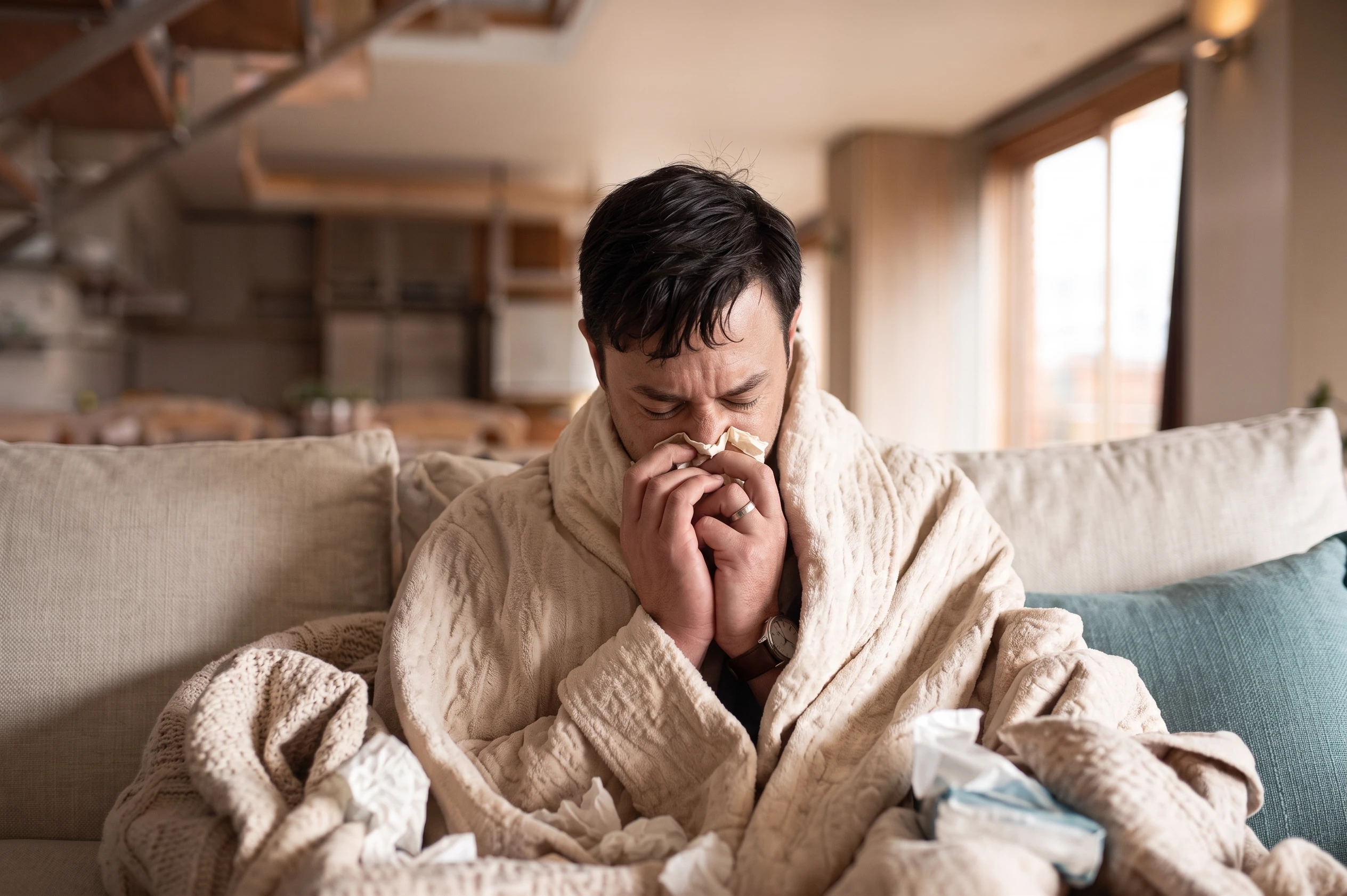
Feeling sick with COVID-19 can be frustrating, especially when fever, fatigue, cough, sore throat, or congestion make your normal routine difficult. If you are wondering, how long does COVID last? Most people with mild or moderate COVID-19 recover within about 4 weeks, although some symptoms may take longer to settle.
For some people, symptoms improve within several days, while others may experience fatigue, cough, headaches, or shortness of breath for weeks. But recovery varies with illness severity, age, overall health, and other risk factors. If symptoms worsen or you develop trouble breathing, persistent chest pain or pressure, new confusion, or difficulty staying awake, seek emergency medical care immediately.
What Causes COVID?
COVID-19 is caused by an infection with a specific coronavirus, but knowing how the infection occurs can help you recognize your risk. The virus can enter the body through the respiratory system and may cause symptoms ranging from mild congestion and fatigue to severe breathing problems.
- Infection With SARS-CoV-2: COVID-19 occurs when SARS-CoV-2, the virus responsible for COVID-19, infects the body and begins multiplying.
- Breathing In Infectious Particles: The virus can spread when you inhale respiratory droplets or very small airborne particles released by an infected person while breathing, talking, coughing, or sneezing.
- Close Contact With An Infected Person: Spending time near someone carrying the virus can increase exposure, particularly during prolonged interactions or in crowded, poorly ventilated spaces.
- Contact With The Eyes, Nose, Or Mouth: Infectious respiratory particles can reach the eyes, nose, or mouth, allowing the virus to enter the body.
- Exposure From People Without Symptoms: A person can transmit SARS-CoV-2 before symptoms appear or without developing noticeable symptoms, making it possible to become infected without realizing where the exposure occurred.
COVID Timeline: What To Expect Each Day
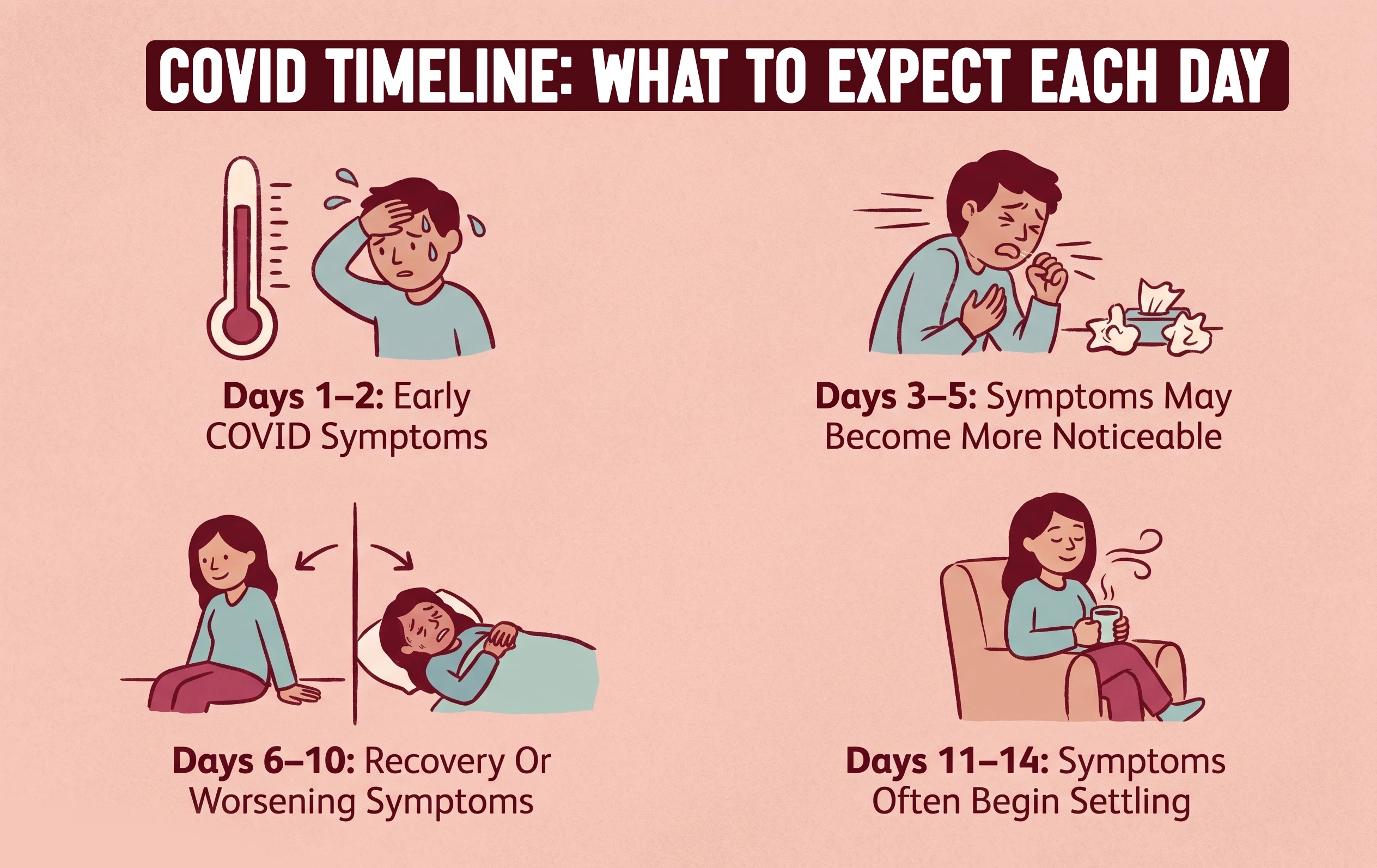
COVID-19 can progress differently from person to person, so there is no exact day-by-day pattern everyone follows. Symptoms may begin mildly and improve within days, while others may experience stronger symptoms or a longer recovery. Common COVID symptoms include fever, cough, sore throat, congestion, fatigue, headache, body aches, nausea, and diarrhea.
Days 1–2: Early COVID Symptoms
Early COVID symptoms may include sore throat, fatigue, headache, fever or chills, cough, congestion, and body aches. Some people may also develop nausea, vomiting, diarrhea, or changes in taste or smell. Symptoms can initially feel similar to a cold or flu, making testing useful when COVID-19 is suspected, particularly for people at higher risk of severe illness.
Days 3–5: Symptoms May Become More Noticeable
During the next few days, COVID symptoms may become more noticeable, with fever, cough, fatigue, headache, congestion, or muscle aches affecting daily activities. Some people begin improving during this period, while others may experience worsening symptoms. If you have risk factors for severe COVID-19, contact a healthcare professional promptly because antiviral treatment should be started within 5–7 days of symptom onset.
Days 6–10: Recovery Or Worsening Symptoms
By days 6–10, many people with mild COVID-19 begin to feel better, although cough, fatigue, congestion, or weakness can continue. However, COVID-19 can progress to more serious illness, particularly in older adults and people with certain underlying conditions. New or worsening shortness of breath, persistent chest pain or pressure, confusion, or difficulty staying awake requires immediate medical attention.
Days 11–14: Symptoms Often Begin Settling
During the second week, many people with mild COVID-19 continue to recover as fever and other acute symptoms settle. However, fatigue, cough, headache, or changes in taste and smell may take longer to resolve. Recovery is not always complete after two weeks, so symptoms that remain or worsen should be discussed with a healthcare professional rather than ignored.
COVID Symptoms That Persist After 2 Weeks
Some people continue experiencing COVID symptoms after the initial illness, including fatigue, cough, headache, shortness of breath, or problems with concentration. Most people recover from acute COVID-19 within about four weeks, although many continue improving between four and 12 weeks. Symptoms that persist, return, or interfere with normal activities may warrant evaluation for post-COVID conditions or another underlying problem.
Is COVID Contagious?
Yes, COVID-19 is contagious and can spread even before an infected person realizes they are sick. SARS-CoV-2 spreads mainly through respiratory particles released when an infected person breathes, talks, coughs, or sneezes. A PubMed-indexed study analyzing transmission data from 15,648 contacts found that 59.2% of transmission events occurred during the presymptomatic phase, highlighting why COVID can spread before symptoms appear.
How Long Are You Contagious With COVID?
- Most People: Up To 10 Days: People with mild COVID-19 are usually most contagious around symptom onset, with infectiousness declining afterward.
- Before Symptoms: COVID-19 can spread before symptoms appear, so someone may transmit the virus without realizing they are infected.
- After Symptoms Improve: You may still spread COVID after feeling better. Take added precautions for 5 days after returning to normal activities.
- Severe COVID-19: People with severe illness may remain contagious longer and may need precautions for up to 20 days.
- Weakened Immune System: Immunocompromised people can remain infectious longer and may need additional guidance from a healthcare professional.
Dangerous Symptoms Of COVID
Most people recover from COVID-19 without serious complications, but some develop severe illness that needs urgent care. Warning signs can indicate low oxygen levels or other serious complications. A PubMed study found that 55.1% of hospitalized patients experienced shortness of breath.
- Trouble breathing.
- Persistent chest pain or pressure.
- New confusion.
- Difficulty staying awake.
- Pale, gray, or blue skin, lips, or nails.
- Sudden severe weakness.
How To Treat COVID
Most people with mild COVID-19 can recover at home with supportive care. However, people at higher risk of severe illness may need treatment to reduce the chance of complications. Treatment depends on your symptoms, health history, and risk factors. Starting appropriate treatment early can be important because some options work best within the first few days.
Antiviral Medications
Antiviral medications can reduce the risk of severe COVID-19 in people at higher risk. Paxlovid is usually preferred and should be started within 5 days of symptoms. Remdesivir is another option that can be started within 7 days. Molnupiravir may be used when preferred options are not suitable or available.
Symptom Relief
Over-the-counter medicines can help manage fever, headache, body aches, and cough. Acetaminophen or ibuprofen may help reduce fever and pain when used appropriately. Cough medicines may also provide relief. Follow dosing instructions and ask a healthcare professional if you are unsure which medicine is safe for you.
Rest And Fluids
Rest can help your body recover while your immune system fights the infection. Drink enough fluids to help prevent dehydration, especially if you have fever, vomiting, or diarrhea. Water and other suitable fluids can help maintain hydration. Seek medical care if you cannot keep fluids down or develop signs of dehydration.
Hospital Treatment
Severe COVID-19 may require hospital care and close monitoring. Treatment can include oxygen support and other therapies based on the severity of the illness. People with serious breathing problems or other emergency symptoms should seek immediate medical attention.
When To Go To The ER
Most COVID-19 cases can be managed at home, but some people develop complications that require immediate medical attention. Go to the ER if your condition suddenly worsens or you develop signs of severe illness. Emergency warning signs can indicate problems with breathing, oxygen levels, circulation, or brain function. Do not delay emergency care if these warning signs appear.
- Severe difficulty breathing.
- Persistent chest pain or pressure.
- New confusion or unusual behavior.
- Inability to wake or stay awake.
- Pale, gray, or blue lips, skin, or nail beds.
- Seizures or sudden loss of consciousness.
- Severe weakness or inability to stay steady.
- Symptoms that improve but suddenly return or worsen.
- Signs of severe dehydration, such as not urinating.
Get COVID Emergency Care At East Houston Medical Center
COVID-19 can become serious when complications affect breathing, oxygen levels, or alertness. Warning signs such as severe difficulty breathing, persistent chest pain, new confusion, or difficulty staying awake require immediate medical attention. Prompt emergency care can help identify complications and provide appropriate treatment.
If you or someone in your family develops severe COVID-19 symptoms, visit East Houston Medical Center for prompt emergency evaluation and care. Their medical team can assess your condition and determine the appropriate level of treatment when COVID-19 symptoms become severe.
Key Takeaways
- Most people recover from COVID-19 within about 4 weeks, although some symptoms can last longer.
- COVID-19 symptoms and recovery time can vary depending on illness severity, age, and individual risk factors.
- Some people experience lingering symptoms such as fatigue, cough, headache, or shortness of breath for 4–12 weeks or longer.
- People at higher risk of severe COVID-19 may benefit from early antiviral treatment, which works best when started promptly.
- Severe difficulty breathing, persistent chest pain, new confusion, or difficulty staying awake requires immediate emergency medical care.
Is Diarrhea A Symptom Of COVID?
Yes. Diarrhea can occur with COVID-19, sometimes along with nausea or vomiting. Gastrointestinal symptoms may appear before fever or respiratory symptoms.
How Long To Quarantine With COVID?
There is no fixed quarantine period under current CDC community guidance. Stay home until your symptoms are improving overall, and you have been fever-free for at least 24 hours without fever-reducing medicine, then take extra precautions for 5 more days.
How Long Are You Contagious With COVID?
Most people are most contagious around symptom onset and can spread COVID-19 for up to about 10 days. People with weakened immune systems may remain contagious longer.
How Long Does COVID Last In Your Body?
Most people improve within a few weeks, but recovery varies. Some symptoms can last longer, especially after more severe illness, and lingering symptoms may continue after the infection has cleared.