

Dealing with digestive discomfort can be frustrating, especially when it begins to interfere with your daily routine, meals, or sleep. Gastroesophageal reflux disease (GERD) is a common digestive condition that develops when stomach contents repeatedly flow back into the esophagus, irritating the lining and affecting everyday comfort.
Occasional acid reflux is common, but GERD is a more persistent condition that may require proper management to prevent complications. Although GERD can often be managed with lifestyle changes and medications, do not assume severe or unexplained chest discomfort is caused by acid reflux. Seek emergency medical care if chest discomfort occurs with shortness of breath, sweating, dizziness, or pain spreading to the arm, shoulder, back, neck, or jaw.
What Causes GERD?
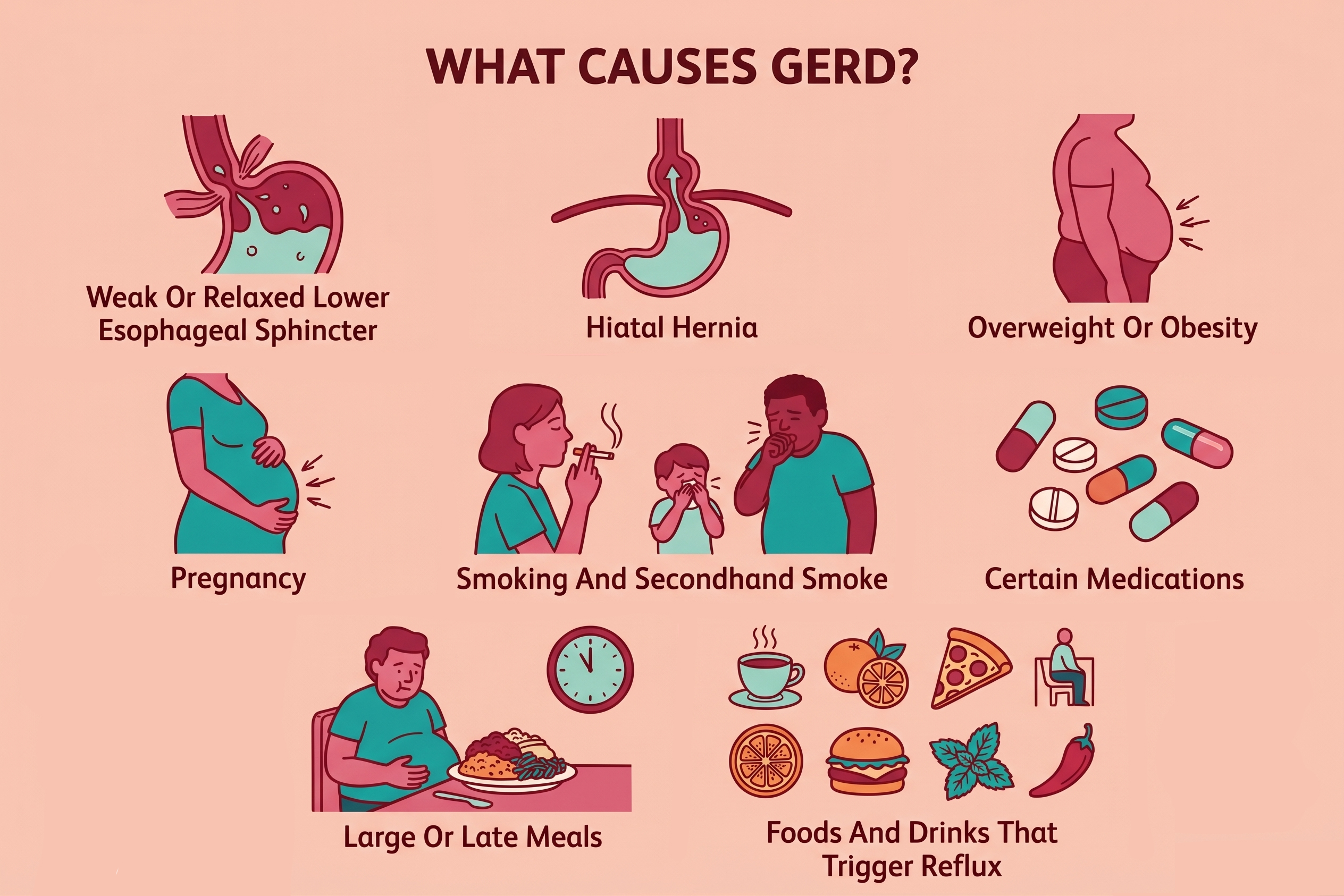
GERD develops when the normal barrier that keeps stomach contents from flowing back into the esophagus does not work effectively. Several factors can interfere with this barrier, increase pressure on the stomach, or make reflux more likely. For some people, GERD results from one major risk factor, while others may have several contributing factors at the same time.
Weak Or Relaxed Lower Esophageal Sphincter
The lower esophageal sphincter (LES) is a ring of muscle that normally closes after food enters the stomach. If it becomes weak or relaxes when it should remain closed, stomach contents can flow backward into the esophagus. This abnormal relaxation is one of the main mechanisms behind GERD.
Hiatal Hernia
A hiatal hernia occurs when part of the stomach pushes upward through an opening in the diaphragm. This can interfere with the normal barrier between the stomach and esophagus and increase the likelihood of reflux. A hiatal hernia may also make existing GERD symptoms more difficult to control.
Overweight Or Obesity
Carrying excess weight, particularly around the abdomen, can increase pressure inside the abdomen and contribute to stomach contents moving upward into the esophagus. Overweight and obesity are recognized risk factors for GERD. For people who are overweight or have obesity, medically appropriate weight loss may help reduce reflux symptoms.
Pregnancy
Hormonal and physical changes during pregnancy can make acid reflux more likely. Pregnancy hormones may affect the muscles involved in preventing reflux, while the growing uterus can increase pressure on the stomach. These changes can cause or worsen GERD during pregnancy, even in people who did not previously experience frequent reflux.
Smoking And Secondhand Smoke
Smoking can interfere with the normal function of the lower esophageal sphincter and may increase the likelihood of reflux. Regular exposure to secondhand smoke may also contribute to GERD risk. Quitting smoking can benefit overall digestive and cardiovascular health and may help reduce reflux-related problems.
Certain Medications
Some medications can trigger or worsen GERD by affecting the lower esophageal sphincter or other parts of the digestive system. Examples include certain sedatives, calcium channel blockers, some asthma medicines, NSAIDs, and tricyclic antidepressants. Do not stop a prescribed medication on your own; talk with your healthcare provider about possible alternatives if you suspect a medicine is worsening your reflux.
Large Or Late Meals
Large meals can increase the amount of pressure and contents in the stomach, making reflux more likely in some people. Eating shortly before lying down can also worsen nighttime reflux because gravity is no longer helping keep stomach contents down. If nighttime GERD is a problem, eating at least three hours before lying down may help.
Foods And Drinks That Trigger Reflux
Certain foods and drinks can worsen GERD symptoms in some people, although they do not cause GERD in everyone. Commonly reported triggers include high-fat foods, spicy foods, chocolate, mint, coffee and other caffeinated drinks, alcohol, tomatoes, and citrus foods. Keeping track of individual triggers can be more useful than unnecessarily eliminating large groups of foods.
Dangerous GERD Symptoms You Should Never Ignore
GERD can cause uncomfortable symptoms, but some changes should not simply be attributed to acid reflux. Warning signs such as difficulty swallowing, unexplained weight loss, persistent vomiting, or signs of gastrointestinal bleeding can indicate complications or another underlying condition that requires medical evaluation.
A 2024 study of 221 patients with erosive esophagitis found that 26.7% had weight loss, 14.5% had gastrointestinal bleeding, and 7.2% had dysphagia, highlighting why these warning signs deserve prompt attention. Because this was a single-center study, these percentages should not be considered representative of everyone with GERD.
- Difficulty Swallowing: Food or liquids may feel stuck.
- Painful Swallowing: Swallowing may cause esophageal pain.
- Unexplained Weight Loss: Losing weight without trying needs evaluation.
- Persistent Vomiting: Repeated vomiting can cause dehydration.
- Vomiting Blood: Blood in vomit may indicate bleeding.
- Black, Tarry Stools: These may signal digestive bleeding.
- Loss Of Appetite: Persistent appetite loss should be evaluated.
- Worsening Chest Pain: Chest pain may signal a heart problem.
How Is GERD Diagnosed?
Getting the right diagnosis can be reassuring, especially when recurring reflux is affecting your meals, sleep, or daily activities. In many cases, healthcare providers can identify GERD by reviewing your medical history and the pattern of your symptoms rather than immediately ordering extensive testing.
- Medical History And Symptom Review: Your provider will ask about your symptoms, when they occur, triggers, and medical history to determine whether GERD is likely.
- Upper GI Endoscopy: A camera-equipped tube examines the esophagus and stomach for inflammation, ulcers, narrowing, bleeding, or other abnormalities. Biopsies may also be taken when needed.
- Esophageal pH Monitoring: This test measures how often and how long stomach acid enters the esophagus, helping confirm GERD when the diagnosis is unclear.
- Esophageal Impedance Monitoring: This test detects both acidic and non-acidic reflux and may be useful when symptoms continue despite acid-reducing medication.
- Esophageal Manometry: Manometry measures esophageal muscle movement and pressure, including how well the lower esophageal sphincter functions.
- Upper GI Series: You swallow a contrast liquid while X-rays are taken to look for structural problems, although this is not the main test for routine GERD.
When To Go To The ER For GERD
Most GERD symptoms do not require emergency care, but certain signs can indicate serious bleeding, blockage, dehydration, or a heart-related emergency. Chest pain requires particular caution because a heart attack can feel similar to severe heartburn. When symptoms are sudden, severe, or unusual, seek urgent medical evaluation.
- Severe or sudden chest pain.
- Chest pain with shortness of breath.
- Chest discomfort with sweating or dizziness.
- Pain spreads to the arm, jaw, neck, shoulder, or back.
- Vomiting blood or material that looks like coffee grounds.
- Black, tarry stools with weakness or fainting.
- Food becoming completely stuck or inability to swallow.
- Repeated vomiting with severe dehydration or fainting.
How To Treat GERD
Treatment for GERD focuses on reducing reflux, controlling symptoms, protecting the esophagus, and preventing complications. The best approach depends on how often symptoms occur, whether the esophagus has been damaged, and how well symptoms respond to initial measures. Some people improve with changes to eating and daily habits, while others need medications or additional treatment from a healthcare professional.
Lifestyle And Eating Changes
Changing eating and daily habits can reduce reflux for many people. Helpful measures may include avoiding individual food triggers, eating smaller meals, remaining upright after eating, and avoiding meals within three hours of lying down. If you are overweight or have obesity, your healthcare provider may also recommend a medically appropriate weight-management plan.
Antacids
Antacids neutralize stomach acid and can provide relatively quick, short-term relief from occasional heartburn. They are generally intended for intermittent symptoms rather than controlling persistent GERD on their own. Frequent reliance on antacids should prompt a discussion with a healthcare professional about whether a more appropriate treatment is needed.
H2 Blockers
H2 blockers reduce the amount of acid produced by the stomach and can provide longer-lasting acid control than simple antacids. They may be available without a prescription or prescribed depending on the medication and situation. Your healthcare provider can help determine whether an H2 blocker is appropriate for your symptoms.
Proton Pump Inhibitors
Proton pump inhibitors (PPIs) substantially reduce stomach acid production and are commonly used for GERD. They can help relieve symptoms and allow an irritated esophageal lining to heal. If symptoms persist despite appropriate PPI treatment, medical evaluation is important rather than simply increasing or continuing medication indefinitely without guidance.
Elevating The Upper Body During Sleep
For people whose GERD becomes worse at night, elevating the upper body can reduce reflux while lying down. NIDDK notes that raising the head and upper back by about 6 to 8 inches may help nighttime symptoms. A foam wedge designed to elevate the upper body is generally more effective than simply adding pillows beneath the head.
Surgery And Endoscopic Treatment
When GERD remains difficult to control despite appropriate medical treatment, or when complications develop, a specialist may consider procedural treatment. Surgical options can strengthen the barrier between the stomach and esophagus, while certain endoscopic procedures can provide less invasive approaches for selected patients.
Get GERD Treatment at East Houston Medical Center
Persistent reflux should not be ignored, especially when it begins affecting your daily life or is accompanied by concerning symptoms. While many GERD cases can be managed with routine medical care, severe chest discomfort, vomiting blood, difficulty swallowing, or other warning signs may require immediate evaluation.
If you are experiencing persistent or concerning GERD symptoms, East Houston Medicaal Center can provide prompt medical evaluation and care when you need it. For non-life-threatening symptoms, appropriate outpatient care may be available, while severe chest pain or other potentially life-threatening symptoms require immediate emergency medical attention.
Key Takeaways
- GERD occurs when stomach contents repeatedly flow back into the esophagus.
- A weak lower esophageal sphincter, hiatal hernia, excess weight, pregnancy, and certain medications can contribute to GERD.
- GERD can be diagnosed through symptom review and, when needed, tests such as endoscopy or esophageal pH monitoring.
- Lifestyle changes and medications can often help control GERD and protect the esophagus.
- Severe chest pain, vomiting blood, black stools, or difficulty swallowing require prompt medical evaluation.
Frequently Asked Questions About GERD
Can GERD Cause Shortness Of Breath?
Yes, GERD may contribute to shortness of breath or wheezing in some people, particularly when reflux irritates the throat or airways. However, breathing difficulty can have serious causes, so sudden or severe shortness of breath should receive immediate medical attention.
Is GERD Curable?
GERD can often be effectively controlled with lifestyle changes, medications, and, in some cases, procedures. While treatment can provide long-term relief, some people may experience symptoms again and need ongoing management.
Can GERD Cause Back Ache?
GERD can sometimes cause discomfort that is felt in the back, although back pain is not a typical GERD symptom. Because back pain can have many other causes, persistent or severe pain should be evaluated rather than automatically attributed to reflux.
How Long Does GERD Last?
GERD is generally considered a chronic condition, meaning symptoms can recur over time. How long symptoms last and how frequently they occur varies from person to person and may depend on triggers, lifestyle factors, and treatment.
Does GERD Cause Coughing?
Yes, GERD can contribute to a persistent cough when stomach contents or reflux irritate the throat and upper airways. A chronic cough can also have many other causes, so ongoing coughing should be evaluated if it does not improve.