

What Is Anaphylaxis? Symptoms, Causes, and Treatment
Anaphylaxis is a severe allergic reaction that can become life-threatening within minutes. It happens when the immune system overreacts to an allergen and releases chemicals that can cause swelling, breathing problems, a sudden drop in blood pressure, and other serious symptoms. Common triggers include certain foods, medications, insect stings, and latex. If you need prompt medical evaluation for a non-life-threatening allergic reaction or related symptoms, East Houston Medical Center offers medical services that can help you get the appropriate care.
Unlike a mild allergy, anaphylaxis can affect multiple parts of the body at the same time and may progress quickly. Knowing the anaphylaxis symptoms and recognizing when emergency treatment is needed can make an important difference. If you suspect anaphylaxis, do not wait for symptoms to improve on their own.
What Causes Anaphylaxis?
Anaphylaxis occurs when the immune system has an extreme response to a substance that it identifies as harmful. The reaction can cause widespread inflammation, airway narrowing, blood vessel dilation, and a dangerous drop in blood pressure.
Common triggers include:
- Foods: Peanuts, tree nuts, shellfish, fish, milk, eggs, wheat, soy, and sesame can trigger severe allergic reactions.
- Medications: Certain antibiotics, aspirin, other pain relievers, and some medicines used during medical procedures can cause anaphylaxis.
- Insect stings: Bees, wasps, hornets, yellow jackets, and fire ants are recognized triggers.
- Latex: Exposure to latex can cause a severe allergic reaction in some people.
- Exercise: In uncommon cases, physical activity can trigger anaphylaxis, sometimes in combination with certain foods or environmental conditions.
What Are the Anaphylaxis Symptoms?
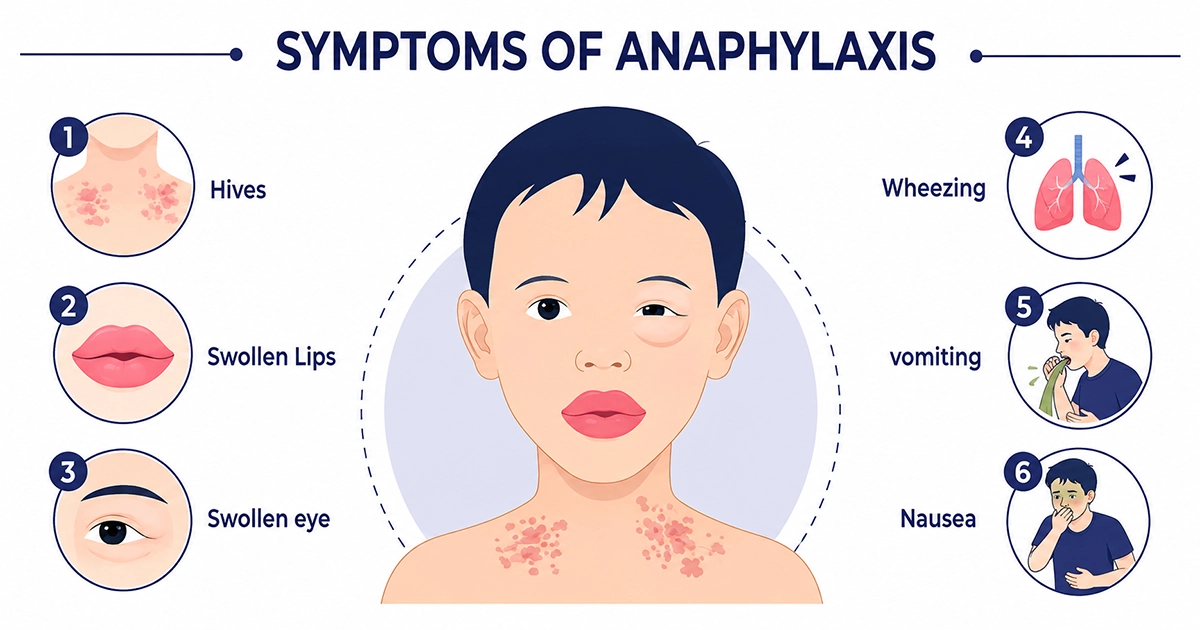
Anaphylaxis symptoms can develop suddenly and may involve the skin, airways, digestive system, and cardiovascular system. They can begin within minutes of exposure, although some reactions may take longer to appear.
Watch for these warning signs:
- Hives, itching, flushing, or pale skin
- Swelling of the lips, tongue, face, or throat
- Wheezing, coughing, or difficulty breathing
- Trouble swallowing or a feeling of throat tightness
- Nausea, vomiting, diarrhea, or abdominal cramps
- Dizziness, confusion, or fainting
- A weak or rapid pulse
- A sudden drop in blood pressure
A person does not necessarily need to have every symptom before anaphylaxis becomes an emergency. Breathing difficulty, throat swelling, fainting, or signs of shock after exposure to a known allergen should be treated as an emergency.
How Quickly Can Anaphylaxis Happen?
Anaphylaxis can develop very quickly after exposure to an allergen, sometimes within seconds or minutes. Mayo Clinic notes that symptoms usually occur within minutes, although reactions can occasionally be delayed for longer periods.
Because the reaction can worsen rapidly, waiting to see whether symptoms become more severe is unsafe. A person who has a known severe allergy should follow their emergency action plan and use prescribed epinephrine promptly when anaphylaxis is suspected.
Is Anaphylaxis Life-Threatening?
Yes. Anaphylaxis is a medical emergency because swelling of the airways can interfere with breathing, while a severe drop in blood pressure can lead to shock. Without rapid treatment, the reaction can become fatal. The seriousness of a reaction can also vary from one episode to another. A previous mild allergic reaction does not guarantee that a future exposure will produce the same level of symptoms, which is why people with known severe allergies should have an emergency plan.
What Should You Do During Anaphylaxis?
If someone develops symptoms suggesting anaphylaxis, act immediately rather than waiting for the reaction to resolve. Call 911 or your local emergency number and use an epinephrine autoinjector immediately if one is available and prescribed.
During an emergency:
- Use the prescribed epinephrine autoinjector as directed.
- Call 911 or get emergency medical help.
- Keep the person lying down if possible, unless breathing is easier in another position.
- Do not give food or drinks.
- If the person stops breathing or has no signs of circulation, begin CPR if you know how.
- Even if symptoms improve after epinephrine, emergency medical evaluation is still necessary because symptoms can return.
What Is the Treatment for Anaphylaxis?
The primary treatment for anaphylaxis is epinephrine, also called adrenaline. It works quickly to counter the severe allergic response and can help improve airway narrowing, blood pressure, and other dangerous effects of anaphylaxis.
Emergency healthcare professionals may provide additional treatment depending on the person’s condition, including oxygen, IV fluids, medications to support blood pressure, and other medicines to manage persistent symptoms. CPR or advanced airway treatment may be required in severe cases.
Epinephrine
Epinephrine is the first-line medication for suspected anaphylaxis and is commonly carried by people who have previously experienced severe allergic reactions. An autoinjector is generally administered into the outer thigh according to its instructions. Clinical guidelines consistently recommend epinephrine as the first-line medication for anaphylaxis, and it should be given as soon as possible when a severe reaction is suspected.
Antihistamines may help with certain allergy symptoms, but they do not replace epinephrine during anaphylaxis. They work too slowly to address the life-threatening airway and circulation problems associated with a severe reaction.
Emergency Hospital Care
After epinephrine is given, emergency evaluation is still important even when symptoms appear to improve. Medical professionals may monitor breathing, blood pressure, and other vital signs and provide additional treatment if symptoms continue or return.
If you are experiencing a suspected anaphylactic reaction, East Houston Medical Center’s emergency care is available for serious and potentially life-threatening medical emergencies. However, during an active anaphylactic reaction, call 911 or your local emergency number immediately rather than delaying emergency response to travel to a medical facility.
Can Anaphylaxis Happen Without Hives?
Yes. Although hives and other skin reactions are common, anaphylaxis does not always involve obvious skin symptoms. A severe reaction can primarily affect breathing, blood pressure, the digestive system, or multiple body systems without prominent hives.
For this reason, the absence of a rash does not rule out anaphylaxis. Difficulty breathing, throat swelling, fainting, or signs of shock after a possible allergen exposure require immediate emergency attention.
What Are the Complications of Anaphylaxis?
The main complications occur when anaphylaxis interferes with breathing or circulation. Severe airway swelling can prevent adequate airflow, while a sudden drop in blood pressure can reduce blood flow to vital organs. In the most serious cases, anaphylaxis can lead to respiratory failure, shock, loss of consciousness, cardiac arrest, or death.
Symptoms can also return after they initially improve, which is known as biphasic anaphylaxis. This is one reason emergency evaluation is recommended even when a person feels better after receiving epinephrine.
How Is Anaphylaxis Diagnosed?
Anaphylaxis is usually diagnosed based on the person’s symptoms, physical examination, and the circumstances surrounding the reaction. A healthcare professional may ask about recent exposure to foods, medications, insect stings, latex, or other potential allergens.
After the emergency has been managed, allergy testing may help identify the trigger. Depending on the situation, testing can include skin tests or blood tests, while a blood test for tryptase may sometimes provide additional information after a reaction.
How Can You Prevent Anaphylaxis?
The most effective way to reduce the risk of another reaction is to identify and avoid the allergen responsible for the previous episode. People with known severe allergies should also have an emergency plan and keep prescribed epinephrine available.
Helpful precautions include:
- Read food labels carefully and ask about ingredients when eating away from home.
- Tell healthcare professionals about medication allergies before treatment.
- Carry prescribed epinephrine and check its expiration date.
- Consider wearing medical alert identification for serious allergies.
- Make sure family members, friends, teachers, coworkers, or caregivers know how to recognize anaphylaxis and use an autoinjector.
- Follow up with an allergy specialist to identify triggers and develop a long-term prevention plan.
When Should You Seek Emergency Care?
A suspected anaphylactic reaction should always be treated as an emergency, particularly when symptoms involve breathing, throat swelling, circulation, or consciousness. Do not wait to see whether symptoms improve because anaphylaxis can progress rapidly.
Call 911 immediately if you notice:
- Trouble breathing or severe wheezing
- Swelling of the tongue or throat
- Difficulty swallowing
- Fainting, severe dizziness, or confusion
- A weak or rapid pulse
- Signs of shock or loss of consciousness
- Multiple severe allergic symptoms occurring together
If an epinephrine autoinjector is available, use it as directed while emergency medical help is being contacted. Even when symptoms improve, follow-up emergency evaluation is still necessary.
Get Anaphylaxis Care at East Houston Medical Center
Anaphylaxis is a severe allergic reaction that can become life-threatening within minutes. Recognizing symptoms such as throat swelling, breathing difficulty, hives, vomiting, dizziness, or a sudden drop in blood pressure can help you respond quickly. Epinephrine is the first-line treatment, and emergency medical care is needed even if symptoms improve after the injection.
If you or someone in your family has experienced a severe allergic reaction, identifying the trigger and creating an emergency plan can help reduce the risk of future complications. For non-life-threatening allergy evaluation and follow-up care, you can explore East Houston Medical Center and its available medical services.
Frequently Asked Questions
What Is an Anaphylactic Reaction?
An anaphylactic reaction is a severe allergic reaction that can affect breathing, blood pressure, skin, and other body systems. It can develop rapidly after exposure to an allergen and requires immediate emergency treatment.
What Are the Most Common Triggers of Anaphylaxis?
Common triggers include foods such as peanuts and shellfish, certain medications, insect stings, and latex. In some cases, exercise or another trigger may be involved, while the cause is not always identified. (Mayo Clinic)
Can Anaphylaxis Go Away on Its Own?
Anaphylaxis should never be expected to go away on its own. Symptoms can worsen quickly and become life-threatening, so suspected anaphylaxis requires immediate epinephrine when available and emergency medical care. (Mayo Clinic)
Is Benadryl Enough for Anaphylaxis?
No. Antihistamines such as diphenhydramine can help with some mild allergy symptoms but are not a substitute for epinephrine during anaphylaxis. Emergency treatment with epinephrine is needed for a severe allergic reaction. (Mayo Clinic)
Can Anaphylaxis Happen Again?
Yes. A person who has experienced anaphylaxis may be at risk of another reaction after future exposure to the same allergen. Identifying triggers, avoiding exposure, carrying prescribed epinephrine, and having an emergency plan can help reduce the risk.
:::