

Rhinovirus is one of the most common viruses responsible for the common cold. If you develop a runny or stuffy nose, sneezing, sore throat, cough, or mild headache, rhinovirus may be one possible cause. In the United States, rhinoviruses are the most frequent cause of the common cold, although many other respiratory viruses can produce similar symptoms.
Most people recover from a rhinovirus infection without specific treatment. However, the infection can sometimes trigger asthma attacks or cause more serious respiratory problems, particularly in young children, older adults, people with weakened immune systems, or those with underlying health conditions. Understanding what causes rhinovirus, how long symptoms take to appear, and when medical care is needed can help you manage the illness safely.
What Is Rhinovirus?
Rhinovirus is a respiratory virus that commonly infects the nose and throat and is the leading viral cause of the common cold. It belongs to the Picornaviridae family and is a non-enveloped, single-stranded RNA virus. Because there are many different rhinovirus types, a person can experience a rhinovirus infection more than once.
Although rhinovirus usually causes a mild upper respiratory infection, it is not always insignificant. The infection can contribute to asthma exacerbations and, in higher-risk individuals, may be associated with lower respiratory complications. Most infections remain mild, but people with asthma, weakened immune systems, or certain underlying conditions may be more vulnerable to serious illness.
What Causes Rhinovirus?
Rhinovirus infection occurs when a person is exposed to one of the many types of human rhinoviruses. These viruses commonly infect the nose and throat and can spread through respiratory particles, close contact, or contaminated surfaces. Once the virus enters the body through the nose, mouth, or eyes, it can infect the upper respiratory tract and trigger the inflammatory response responsible for many cold symptoms.
Common Ways Rhinovirus Spreads
Rhinovirus can reach the respiratory system through several everyday forms of exposure:
- Respiratory particles: An infected person can release virus-containing particles when coughing, sneezing, or talking. Breathing in these particles can expose another person to the virus.
- Close personal contact: Close contact with someone who has a rhinovirus infection can increase the chance of transmission.
- Contaminated surfaces: Virus-containing respiratory secretions can contaminate objects and surfaces. Touching them and then touching the nose, mouth, or eyes can provide another route for infection.
- Unwashed hands: Rhinovirus can spread when contaminated hands come into contact with the face, particularly the nose, mouth, or eyes.
- Crowded settings: Schools, workplaces, households, and other places where people spend time close together can create more opportunities for respiratory viruses to spread.
Cold weather itself does not cause rhinovirus. Instead, infection occurs after exposure to the virus. Seasonal patterns and changes in indoor contact may influence when respiratory viruses circulate more widely.
Is Rhinovirus the Same as the Common Cold?
Rhinovirus and the common cold are closely related, but they are not exactly the same thing. A common cold is an illness caused by many different viruses, while rhinovirus is a specific group of viruses that causes a large proportion of these infections. Rhinoviruses are considered the most frequent cause of the common cold in the United States.
In other words, rhinovirus can cause a common cold, but not every common cold is caused by rhinovirus. Seasonal coronaviruses, adenoviruses, parainfluenza viruses, and other respiratory viruses can also produce similar cold-like symptoms.
Why Is Rhinovirus Called a Cold Virus?
Rhinovirus is often described as a cold virus because it is the most common viral cause of the common cold. It primarily affects the upper respiratory tract, producing symptoms such as nasal congestion, runny nose, sneezing, sore throat, and coughing.
The term “cold virus” does not mean that cold weather causes the infection. You become infected after exposure to a virus. Rhinoviruses can circulate throughout the year, although their activity can vary by season.
What Is the Rhinovirus Incubation Period?
The rhinovirus incubation period is the time between exposure to the virus and the appearance of the first symptoms. Research generally places the incubation period around 1 to 4 days, while a systematic review estimated the median incubation period at approximately 1.9 days.
This means you may be exposed to rhinovirus and feel completely well for a short period before developing symptoms. The exact timing varies between individuals, so the incubation period cannot determine precisely when or where someone became infected.
What Are the Symptoms of Rhinovirus?
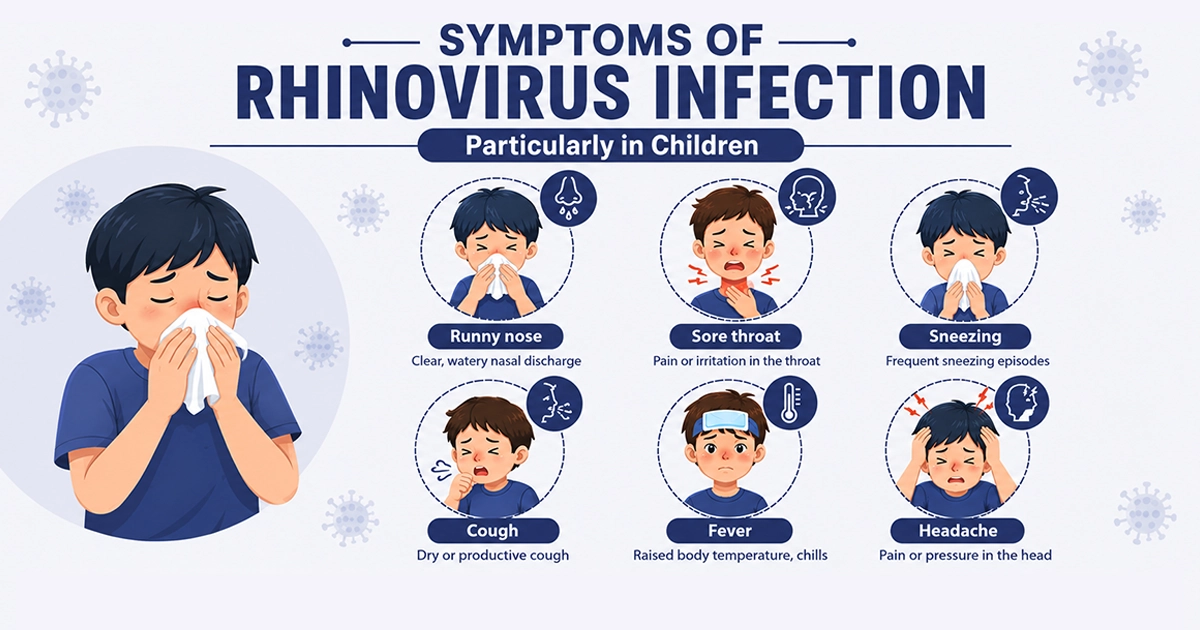
A rhinovirus infection usually produces symptoms similar to those of other common respiratory infections. Symptoms may develop gradually and can include:
- Runny nose
- Stuffy or congested nose
- Sneezing
- Sore throat
- Cough
- Headache
- Mild body aches
- Fatigue
- Fever, particularly in children
Because these symptoms overlap with influenza, COVID-19, and other respiratory infections, symptoms alone cannot always identify rhinovirus specifically. Most people experience a mild illness that improves without specific antiviral treatment.
How Long Does Rhinovirus Last?
Most rhinovirus infections improve on their own as the immune system clears the virus. Many people begin feeling better within several days, although some symptoms, particularly coughing or nasal congestion, may last longer.
The duration can vary from person to person. Children, older adults, and people with certain underlying conditions may experience more persistent or severe symptoms. If symptoms continue without improvement, become significantly worse, or interfere with breathing or hydration, medical evaluation may be appropriate.
How Is Rhinovirus Diagnosed?
Rhinovirus is usually diagnosed based on a person’s symptoms and clinical evaluation rather than a specific rhinovirus test. For a typical mild cold, laboratory testing is generally unnecessary because treatment is supportive and identifying the exact virus would not usually change management.
Testing may become more relevant when symptoms are severe, unusual, persistent, or when a healthcare provider needs to distinguish a cold-like illness from conditions such as influenza or COVID-19. A healthcare professional can determine whether testing or additional evaluation is appropriate based on symptoms and individual risk factors.
How Is Rhinovirus Treated?
There is currently no specific antiviral medicine that cures a routine rhinovirus infection. Treatment generally focuses on relieving symptoms while the body recovers. Rest, adequate fluids, and measures that soothe nasal or throat irritation can make the illness more manageable.
Over-the-counter medicines may help relieve symptoms such as pain, fever, or nasal congestion. The appropriate medication depends on factors such as age, health conditions, other medicines being taken, and the specific symptoms. Always follow product directions and ask a healthcare professional or pharmacist if you are unsure about a medication.
Can Antibiotics Treat Rhinovirus?
No. Antibiotics treat bacterial infections, while rhinovirus is a virus. Taking antibiotics for an uncomplicated rhinovirus infection will not eliminate the virus or speed up normal recovery. Antibiotics may be appropriate only when a healthcare professional identifies a separate bacterial infection or complication.
How Can You Prevent Rhinovirus?
Because rhinovirus spreads easily, prevention focuses on reducing exposure and limiting the transfer of respiratory germs. Good hygiene, cleaner indoor air, and avoiding close contact with people who are sick can help reduce the spread of respiratory viruses.
Helpful prevention measures include:
- Wash your hands regularly with soap and water.
- Cover coughs and sneezes with a tissue or your elbow.
- Avoid touching your eyes, nose, and mouth with unwashed hands.
- Clean frequently touched surfaces.
- Improve indoor air circulation when possible.
- Avoid close contact with people who are sick.
- Stay home and limit contact with others when you are ill.
If you develop respiratory symptoms, CDC guidance recommends staying home and away from others until your symptoms are improving overall and you have been fever-free for at least 24 hours without using fever-reducing medication.
How Serious Is the Rhinovirus?
For most healthy people, rhinovirus causes a mild illness with symptoms similar to the common cold and usually resolves without specific treatment. However, it can be more serious for people with asthma, weakened immune systems, or certain underlying conditions. In these groups, rhinovirus may trigger asthma attacks or contribute to complications such as bronchitis or pneumonia. Severe breathing problems, chest pain, or dehydration should be evaluated by a healthcare professional.
Can Rhinovirus Cause Complications?
For most healthy people, rhinovirus resolves without major complications. However, complications can occur, particularly in people with certain risk factors. Rhinovirus infections have been associated with sinus infections, ear infections, bronchitis, bronchiolitis, pneumonia, and worsening of asthma or other chronic respiratory conditions.
People with asthma, weakened immune systems, or other underlying medical conditions should pay closer attention to worsening respiratory symptoms and seek medical advice when appropriate.
When to See a Doctor For Rhinovirus Symptoms?
A typical mild cold does not always require medical attention. However, you should consider speaking with a healthcare professional if symptoms are severe, getting worse instead of better, or lasting longer than expected. Breathing problems, dehydration, chest pain, or significant worsening of a chronic condition deserve prompt medical attention.
You should seek emergency medical care for severe difficulty breathing, significant chest pain, confusion, severe dehydration, or other serious warning signs. People at higher risk of complications may also benefit from earlier medical evaluation rather than waiting for symptoms to become severe.
For non-life-threatening illnesses that need timely evaluation, East Houston Medical Center’s urgent care services can provide medical assessment and treatment.
Rhinovirus vs. Flu: What Is the Difference?
Rhinovirus and influenza can both cause respiratory symptoms, but they are caused by different viruses and often differ in severity. Rhinovirus commonly causes a runny or stuffy nose, sneezing, sore throat, and cough, while influenza is more likely to cause sudden fever, chills, body aches, fatigue, and more pronounced systemic symptoms.
However, symptoms can overlap, so you should not assume that a respiratory illness is “just a cold” based on symptoms alone. If flu or COVID-19 is suspected, testing may help determine whether specific antiviral treatment could be appropriate, particularly for people at higher risk of severe illness.
Rhinovirus vs. COVID-19?
Rhinovirus and COVID-19 can both cause cough, sore throat, congestion, headache, fatigue, and other respiratory symptoms. Because of this overlap, symptoms alone may not reliably distinguish one infection from another.
If you have symptoms and believe you may have COVID-19, especially if you are at increased risk for severe illness, testing can help determine whether COVID-19 treatment may be appropriate. A healthcare professional can also help determine whether additional testing or evaluation is needed.
Who Is at Higher Risk From Rhinovirus?
Although rhinovirus is usually mild, some people have a higher risk of developing complications. This includes people with asthma, weakened immune systems, and certain underlying medical conditions. Young children and older adults may also require closer monitoring when respiratory symptoms become significant.
If you already have a chronic respiratory or immune-related condition, do not ignore worsening wheezing, shortness of breath, persistent fever, or other significant changes in your health. Early medical advice can help determine whether your symptoms are still consistent with a routine viral infection.
Rhinovirus Care at East Houston Medical Center
If you have persistent or worsening rhinovirus symptoms, especially breathing problems, chest discomfort, or dehydration, timely medical evaluation can help determine whether you need further care. Most rhinovirus infections are mild, but people with asthma, weakened immune systems, or other underlying conditions may need closer attention. East Houston Medical Center provides medical evaluation and urgent care services for non-life-threatening illnesses, helping patients get the appropriate care when they need it.
Frequently Asked Questions
Is Rhinovirus Contagious?
Yes. Rhinovirus is contagious and can spread through respiratory particles, close contact, and contaminated surfaces. Good hand hygiene, covering coughs and sneezes, avoiding close contact while sick, and cleaning frequently touched surfaces can help reduce transmission.
How Long Is the Rhinovirus Incubation Period?
The rhinovirus incubation period is generally about 1 to 4 days. A systematic review estimated the median incubation period at approximately 1.9 days, although individual experiences can vary.
Is Rhinovirus Just a Common Cold?
Rhinovirus is a virus, while the common cold is the illness it can cause. Rhinoviruses are the most frequent cause of the common cold in the United States, but other viruses can also cause cold symptoms.
Is There a Vaccine for Rhinovirus?
There is currently no vaccine that prevents rhinovirus infection. Because rhinoviruses include many different types, prevention currently focuses on hygiene, reducing exposure, and other respiratory virus prevention measures.
Can Rhinovirus Cause Pneumonia?
Rhinovirus usually causes a mild upper respiratory illness, but serious lower respiratory complications, including pneumonia, can occur, particularly in higher-risk individuals. Significant breathing difficulty, chest pain, or other severe symptoms should be medically evaluated.
Can Rhinovirus Trigger Asthma?
Yes. Rhinovirus is a common viral trigger for asthma attacks. People with asthma should pay attention to worsening cough, wheezing, chest tightness, or difficulty breathing during a respiratory infection.