
Having pneumonia can be worrying, especially when you are already dealing with coughing, fever, chest discomfort, or trouble breathing. Is pneumonia contagious? Sometimes, depending on what caused the infection. Viral and bacterial pneumonia can spread between people, while other types are not contagious.
How long pneumonia remains contagious also varies based on the cause and treatment. Some infections become less likely to spread after effective treatment, but symptoms can persist for days or weeks as the lungs recover. If breathing becomes difficult, chest pain is severe, lips or skin look bluish, or confusion develops, seek emergency medical care immediately.
What Causes Contagious Pneumonia?
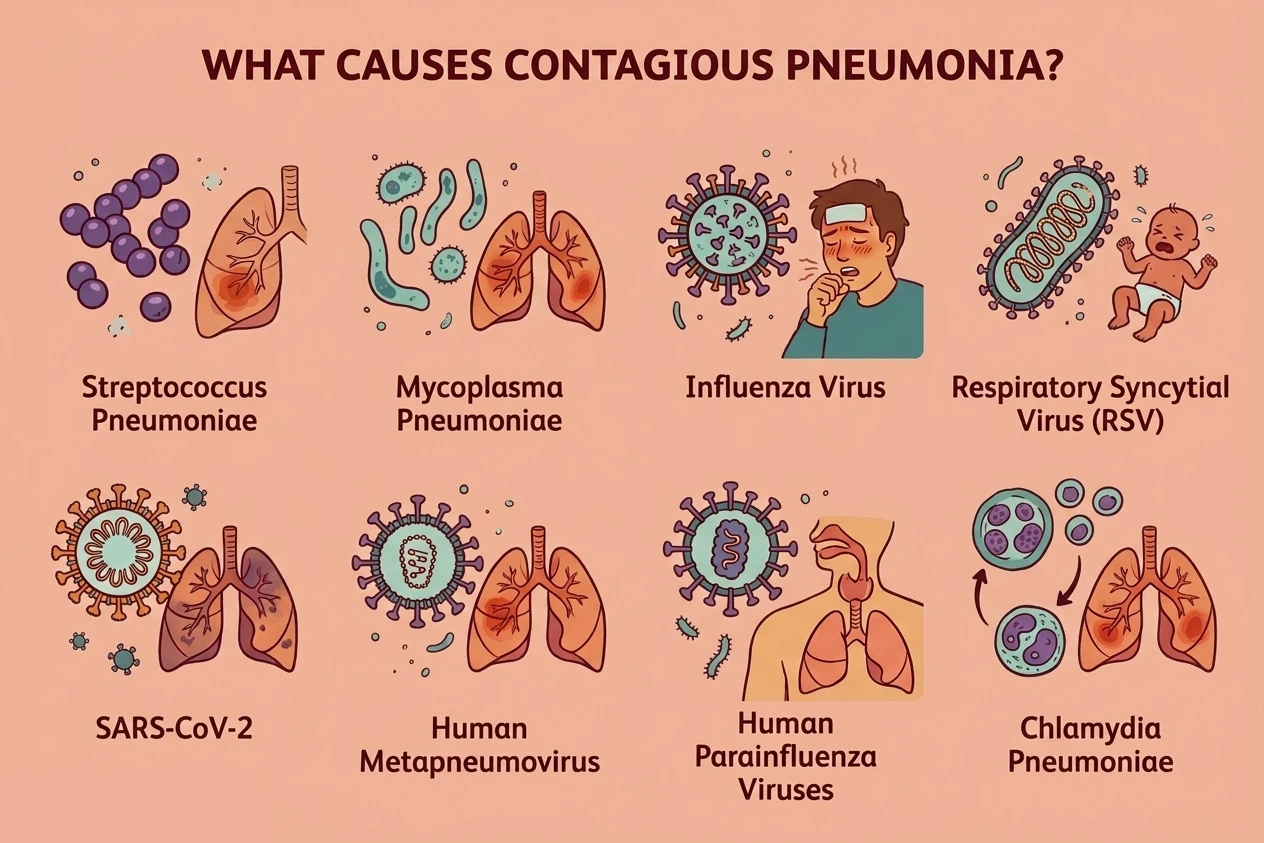
Contagious pneumonia develops when an infectious germ reaches the lungs and causes inflammation in the air sacs, often after spreading through respiratory secretions or close contact. Below are some of the most important infectious causes associated with pneumonia, along with how they can affect the lungs and spread between people.
Streptococcus Pneumoniae
Streptococcus pneumoniae is one of the most common bacterial causes of pneumonia, particularly in adults. It can spread through respiratory secretions such as saliva or mucus during close contact. Some people carry the bacteria in their nose or throat without becoming sick, but it can sometimes lead to pneumonia or other serious infections.
Mycoplasma Pneumoniae
Mycoplasma pneumoniae can cause a relatively mild form of pneumonia often called walking pneumonia. It spreads through respiratory droplets when an infected person coughs or sneezes, particularly during prolonged close contact. Symptoms may develop gradually and can include persistent cough, fever, fatigue, and sore throat.
Influenza Virus
Influenza, or the flu, can directly cause viral pneumonia or make the lungs more vulnerable to a secondary bacterial infection. Flu viruses spread mainly through respiratory droplets and particles released when an infected person coughs, sneezes, or talks. Pneumonia may become more concerning when fever, cough, weakness, or breathing problems become severe or worsen after initial improvement.
Respiratory Syncytial Virus (RSV)
RSV is a common respiratory virus that can cause pneumonia, especially in infants, young children, and older adults. It spreads through respiratory secretions and close contact with an infected person or contaminated surfaces. Symptoms can include cough, congestion, fever, wheezing, and difficulty breathing when the infection becomes more severe.
SARS-CoV-2
SARS-CoV-2, the virus responsible for COVID-19, can infect the lungs and cause viral pneumonia. The virus spreads primarily through respiratory particles released by an infected person, particularly during close or prolonged contact. Pneumonia caused by COVID-19 can range from mild illness to serious breathing problems requiring hospital treatment.
Human Metapneumovirus
Human metapneumovirus (HMPV) is a respiratory virus that can sometimes progress from an upper respiratory infection to pneumonia. It can spread through respiratory secretions and close contact with an infected person. Young children, older adults, and people with weakened immune systems may be more vulnerable to severe respiratory illness.
Human Parainfluenza Viruses
Human parainfluenza viruses can cause respiratory infections and, in some people, progress to pneumonia. These viruses can spread through respiratory secretions and close personal contact. Young children and people with certain underlying health conditions may be at greater risk of developing more serious respiratory disease.
Chlamydia Pneumoniae
Chlamydia pneumoniae is a bacterial infection that can cause respiratory illness, including pneumonia. It spreads through respiratory droplets and close contact, and symptoms may develop gradually rather than suddenly. Persistent cough, fatigue, fever, and sore throat can occur, although illness varies from person to person.
How Does Pneumonia Spread?
If pneumonia is caused by a contagious germ, it can spread through respiratory secretions and close contact. The risk varies by the specific infection and how much exposure occurs. Simple hygiene and limiting close contact while sick can help reduce transmission.
- Coughing And Sneezing: Infectious respiratory particles can spread when someone coughs or sneezes. Staying away from close contact can reduce exposure.
- Close Contact: Spending prolonged time near an infected person can increase exposure to infectious particles. This is more likely in crowded or poorly ventilated spaces.
- Saliva And Mucus: Contact with respiratory secretions can transmit some bacteria and viruses that cause pneumonia. Avoid sharing cups, utensils, or other personal items.
- Contaminated Surfaces: Some respiratory germs can remain on frequently touched surfaces. Touching them and then your nose or mouth may increase the chance of infection.
How Long Is Pneumonia Contagious?
Pneumonia can remain contagious for several days to weeks, depending on the cause. Bacterial pneumonia is generally contagious until antibiotics have reduced the infection, often after about 24–48 hours of effective treatment. Viral pneumonia may remain contagious for as long as the underlying virus is actively spreading, which can vary from several days to a week or longer.
Who Is Most At Risk Of Developing Pneumonia?
Pneumonia can affect anyone, but some people face a higher risk of serious illness. Age, health conditions, and weakened defenses can make the lungs more vulnerable. Recognizing these risk factors can help with early medical care.
- Older Adults: Adults 65 and older have a higher risk of pneumonia and complications.
- Young Children: Children under 5, especially infants, are more vulnerable to pneumonia.
- Chronic Conditions: Heart, lung, kidney, liver, and nervous system conditions can raise risk.
- Weakened Immunity: A weakened immune system can make it harder to fight infections.
- Smokers: Smoking damages lung defenses and increases vulnerability to respiratory infections.
- Swallowing Problems: Difficulty swallowing can allow food or liquids to enter the lungs.
- Healthcare Settings: Hospital and long-term care residents may face increased risk.
How Can You Prevent The Spread Of Pneumonia?
If you or someone close to you has contagious pneumonia, taking simple precautions can lower the chance of spreading the infection. Good hygiene, reducing close contact, and following prescribed treatment are especially important while the infection is active. Vaccination can also help prevent some infections that may lead to pneumonia.
- Wash Your Hands: Wash hands regularly, especially after coughing or sneezing. Use sanitizer when soap and water are unavailable.
- Cover Coughs And Sneezes: Use a tissue or your elbow when coughing or sneezing. Dispose of tissues and wash your hands afterward.
- Avoid Close Contact: Stay away from others while sick, especially older adults, infants, and people with weakened immune systems.
- Do Not Share Items: Avoid sharing cups, utensils, towels, or other personal items that may carry respiratory secretions.
- Improve Ventilation: Open windows or increase indoor airflow when possible to reduce the concentration of infectious respiratory particles.
- Follow Treatment: Take prescribed antibiotics exactly as directed when bacterial pneumonia is diagnosed. Never share antibiotics.
- Stay Home: Avoid work, school, and crowded places while you are sick and potentially contagious.
- Stay Vaccinated: Keep recommended vaccines up to date to help prevent infections that can cause pneumonia.
When To Go To The ER?
Pneumonia can sometimes become serious, particularly when it affects breathing or causes complications. Seek emergency medical care if symptoms suddenly worsen or you develop signs that suggest your lungs are not getting enough oxygen or your body is struggling to fight the infection. Prompt ER evaluation can help identify severe pneumonia and provide treatments such as oxygen, IV medications, or other supportive care when needed.
- Severe difficulty breathing or feeling unable to catch your breath.
- Blue, gray, or pale lips, face, or fingertips.
- New confusion, disorientation, or difficulty staying awake.
- Severe or sudden chest pain, especially with breathing.
- Coughing up a significant amount of blood.
- Very rapid breathing or a racing heartbeat accompanied by worsening illness.
- Fainting, collapse, or extreme weakness.
- Signs of severe dehydration, such as inability to keep fluids down or very little urine.
- Symptoms that rapidly worsen despite treatment.
- Low blood oxygen levels, especially if your oxygen saturation remains below the level recommended by your healthcare provider.
Get Evaluated For Severe Pneumonia Symptoms
Pneumonia can sometimes worsen quickly, particularly when infection causes significant breathing problems or low oxygen levels. Prompt medical evaluation can help identify complications and determine whether treatment is needed.
For concerning but non-life-threatening symptoms, visit East Houston Medical Center for prompt evaluation and treatment. If you have severe difficulty breathing, bluish lips or skin, confusion, fainting, severe chest pain, or trouble staying awake, seek emergency medical care immediately and call 911.
Key Takeaways
- Pneumonia can be contagious when caused by certain bacteria or viruses.
- Contagious pneumonia can spread through respiratory droplets, close contact, and respiratory secretions.
- Staying home when sick and practicing good hand and respiratory hygiene can reduce transmission.
- Vaccination can help prevent several infections that may lead to pneumonia.
- Severe breathing difficulty, chest pain, confusion, fainting, or bluish lips require immediate emergency care.
Frequently Asked Questions
Can Pneumonia Spread Through The Air?
Yes, some infections that cause pneumonia can spread through respiratory droplets or airborne particles released when an infected person coughs, sneezes, or talks. The risk depends on the specific germ.
Can You Catch Pneumonia From Someone Coughing?
You can catch certain bacteria or viruses that cause pneumonia from an infected person who is coughing. However, exposure does not always result in pneumonia, as the risk depends on your health and the specific infection.
How Long Is Pneumonia Contagious After Starting Antibiotics?
For some bacterial pneumonias, contagiousness decreases after effective antibiotics have been taken for about 24 to 48 hours and fever has improved. The exact period varies by the bacteria and individual response to treatment.
Is Bacterial Pneumonia Contagious?
Yes, some types of bacterial pneumonia are contagious and can spread through respiratory secretions or close contact. However, not every bacterial pneumonia spreads easily between people.
Is Viral Pneumonia Contagious?
Yes, viral pneumonia can be contagious because the viruses causing it can spread through respiratory droplets or particles. How easily it spreads and how long someone remains contagious depends on the specific virus.
Can Pneumonia Spread From Person To Person?
Yes, pneumonia caused by contagious bacteria or viruses can spread from person to person. However, pneumonia itself is not always contagious, and some cases result from noninfectious causes or germs already present in the body.