ADVANTAGES AND CONSIDERATIONS
The widespread use of CT scans is attributed to various advantages:
Speed and Accuracy: CT scans are relatively quick, providing detailed images within minutes, enabling prompt diagnosis and treatment.
Non-invasive: Unlike some diagnostic procedures, CT scans are noninvasive, reducing the need for exploratory surgeries or more invasive diagnostic tests.
Versatility: CT scans can image various body parts and structures with high precision.
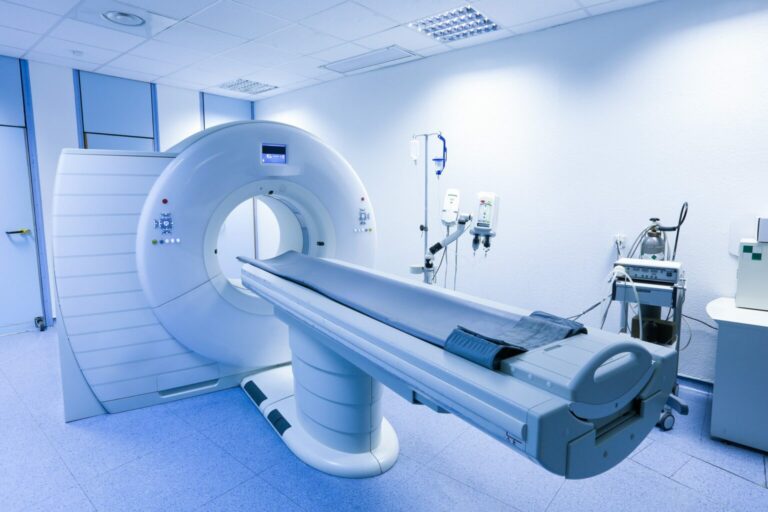
In the realm of modern medicine, Computed Tomography (CT) scans stand as an invaluable diagnostic tool, revolutionizing the way healthcare professionals diagnose and treat various medical conditions. Since its inception in the 1970s, CT scans have continually evolved, becoming an indispensable component of medical imaging technology. These scans provide detailed cross-sectional images of the body, offering insights into internal structures that were previously inaccessible without invasive procedures.
CLINICAL APPLICATIONS
The versatility of CT scans renders them invaluable in diagnosing a wide array of medical conditions across various specialties. These include but are not limited to:
Trauma and Emergency Medicine: CT scans play a crucial role in assessing traumatic injuries, such as head trauma, spinal injuries, and internal bleeding. Their speed and accuracy aid in swift decision-making, potentially saving lives in critical situations.
Oncology: CT scans assist in detecting and staging cancers, monitoring tumor growth, and assessing treatment effectiveness. They provide detailed images that aid oncologists in planning surgeries, radiation therapy, and chemotherapy.
Cardiology: CT angiography allows detailed imaging of blood vessels, aiding in the diagnosis of heart conditions like coronary artery disease, aneurysms, and congenital heart defects.
Neurology: CT scans help in diagnosing conditions such as strokes, brain tumors, and degenerative disorders by providing detailed images of the brain and spinal cord
Practice Mindfulness
Taciti laoreet a est pellentesque suspendisse. Urna velit sapien ultrices leo scelerisque ornare suscipit phasellus. Senectus eleifend ligula mollis inceptos ultricies. Viverra euismod ac eleifend ex ligula tempor. Eros pharetra ornare maecenas non varius. Elementum ipsum donec, maximus tortor primis cras.
CONCLUSION
FUTURE DIRECTIONS
The future of CT scans is promising, with ongoing research focused on enhancing image quality further, reducing radiation exposure, and expanding the technology’s applications. Artificial intelligence and machine learning are being integrated into CT imaging to improve image analysis, automate processes, and assist in diagnosing abnormalities.
However, concerns regarding radiation exposure remain a consideration, especially for frequent scans or vulnerable populations. Efforts to minimize radiation exposure include dose-reduction techniques, such as iterative reconstruction algorithms and appropriate usage guidelines.




Hi, this is a comment.
To get started with moderating, editing, and deleting comments, please visit the Comments screen in the dashboard.
Commenter avatars come from Gravatar.